R
E
S
T

Luminous Ground

Luminous Ground

Luminous Ground

entry n°
A-210
type
artwork
themes
ecology
sediment
soil
date
22 June 2025
June 2025
2025
 – 
17 August 2025
August 2025
2025
location
by
Aliki van der Kruijs
with
No items found.

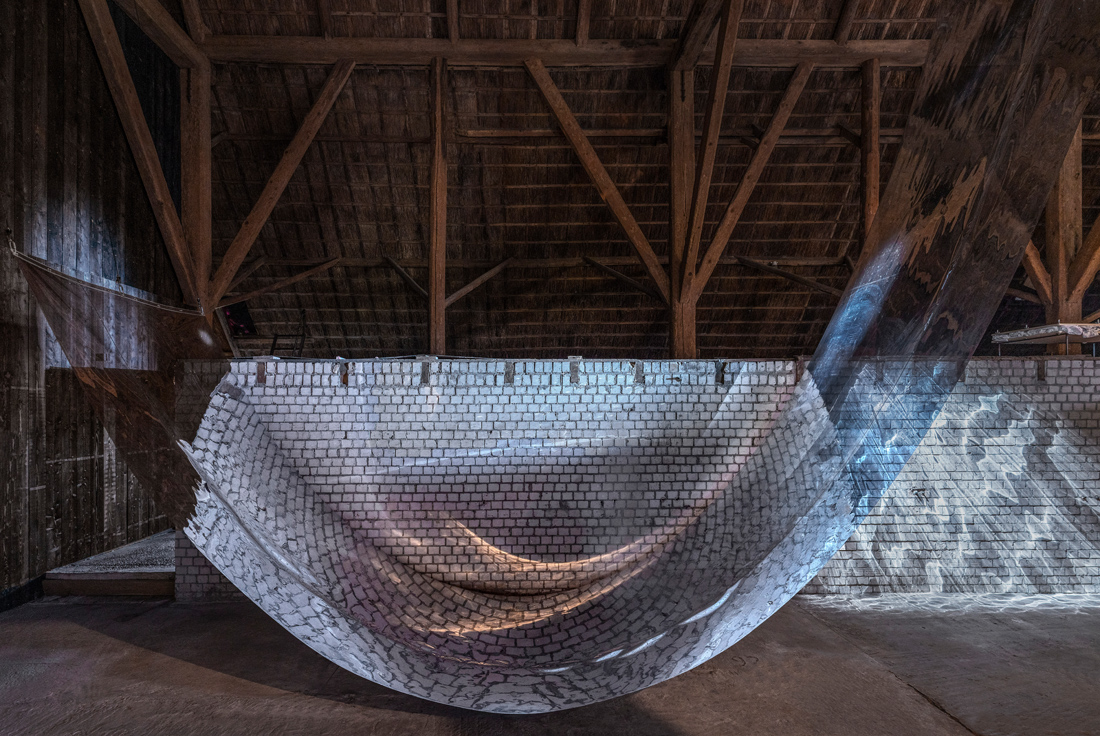
Luminous Ground by Aliki van der Kruijs is based on a study of the soil at REST, including the tests conducted to determine the site’s suitability for residential development in light of its earlier use as a farm. The analysis provided insights on several of the soil’s properties, among which its concentration of inorganic substances, structure and geohydrology. It attested to the soil as a living record of climate change over the thousands of years of its formation. This meteorological history, in combination with current weather, served as the starting point for the work. A semi-transparent stretch of fabric was dyed with clay, sand and loam obtained from the ground directly beneath the mast. The work’s location exposes it to sunshine and wind, which facilitates the adhesion of the dye to the fibers of the fabric throughout the duration of the exhibition.
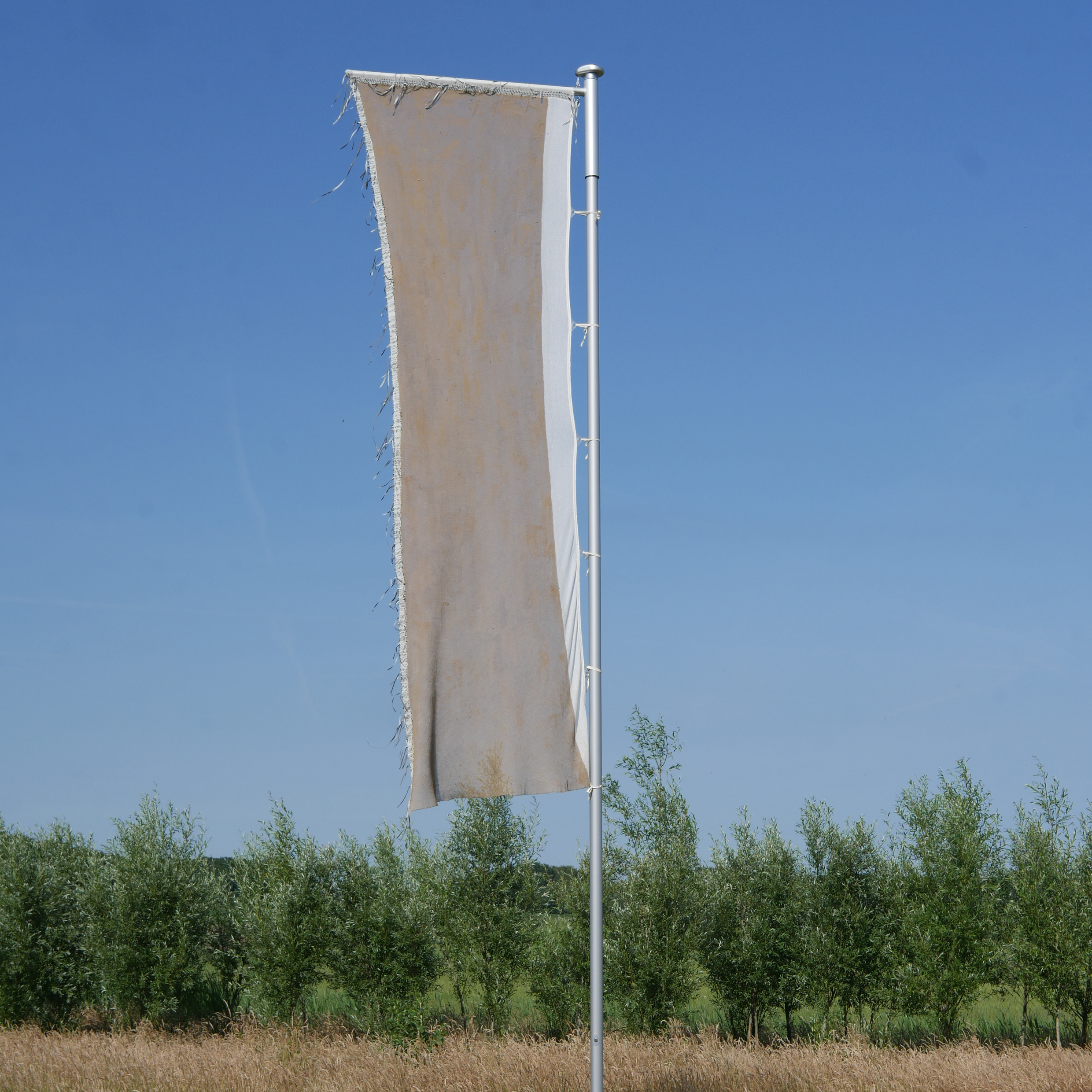
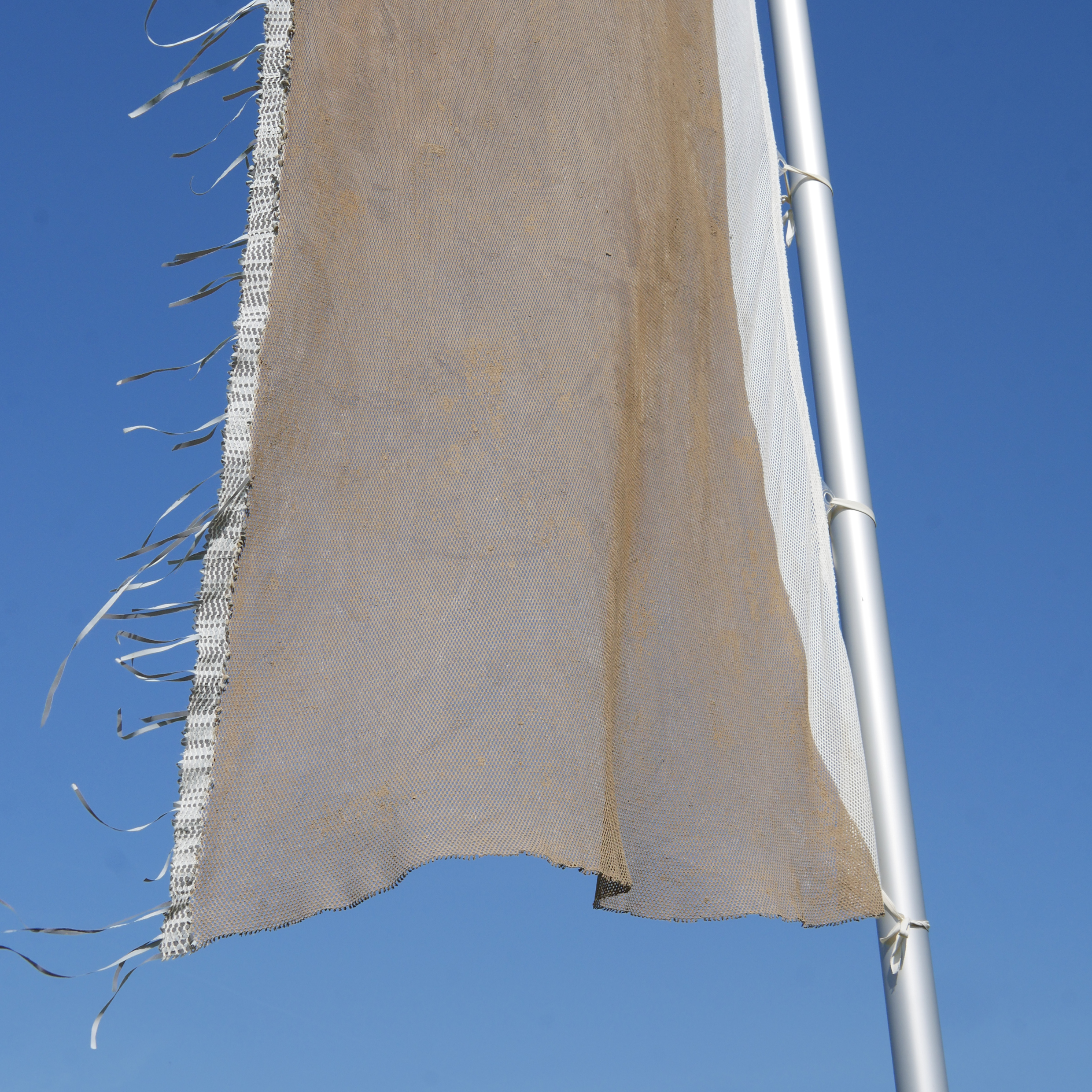
<em>Luminous Ground</em>, 2025<br/>Cotton, cord, various types of soil<br/>700 × 150 × 10 cm

In geo-archaeology, boreholes provide valuable insights into the archaeological and environmental history of a location. It’s a minimally destructive technique that allows obtaining long sediment stratigraphies. Depending on the depositional context, these sediments may contain a suite of paleoenvironmental data and climate proxies including macrofossils of plants and animals, microfossils such as diatoms, foraminifera, and ostracods, and pollen and spores. Even genetic material may be preserved in sediment, reflecting past presence of plants, animals (including humans), fungi, and microorganisms and stable isotope ratios of δ¹⁸O and δ¹³C in carbonates and organic matter provide evidence of past temperature and environmental conditions. As conditions, landscapes, the climate, human presence and use of the land change over time, and sediment deposition continues, the changes are recorded in the sediment sequence. When obtained and analysed these stories can be reconstructed. How far back in time we can go, depends on the depth and sedimentation. If layers are undisturbed, age increases with increasing depth. Still, sedimentation is rarely continuous or uniform. They vary depending on the environment: one meter of sediment may result from a single rapid event like a flood or storm, while in deep lakes or oceans a single centimeter may represent hundreds of years of slow accumulation. As a result, sedimentary layers rarely form a simple, linear continuous timeline.
— Ella Egberts, sediment archaeologist