R
E
S
T

Liminal Spaces

Liminal Spaces

Liminal Spaces

entry n°
S-999
type
artwork
themes
materials
architecture
research
date
3 September 2025
September 2025
2025
 – 
location
61°
by
Saskia Noor van Imhoff
with
REST
Paradys

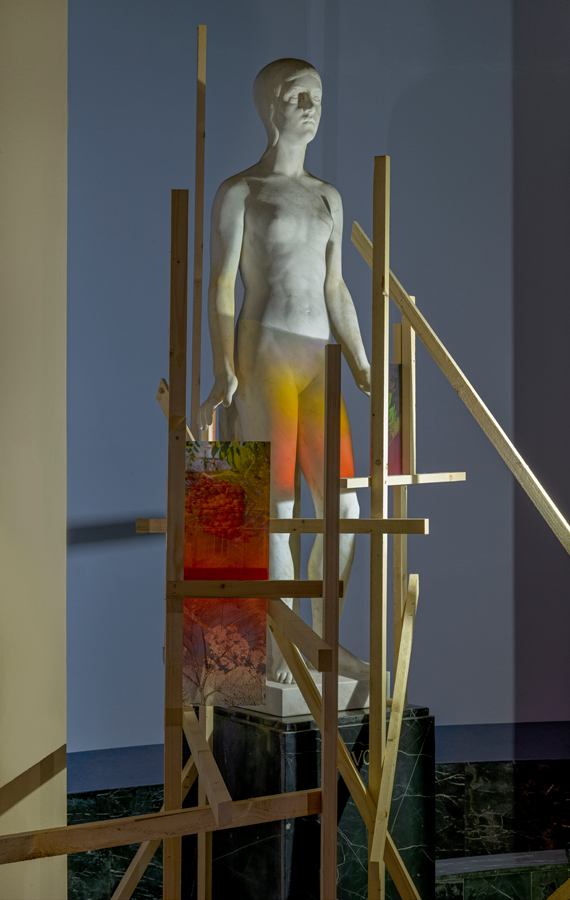
The work of Saskia Noor van Imhoff often centers on transformation – on how time alters objects or places, and on the (often hidden) role of humans in that process. Van Imhoff has been researching the history of the site of REST and the surrounding land, and how it has changed, in part through human influence. Through this interest in history, ‘rootedness,’ and the impact of human intervention, Van Imhoff became fascinated by the Pier Pander Temple in the Prinsentuin park in Leeuwarden, where currently part of this work will be on view as part of the visual arts route Paradys. In this temple, built in 1924, the renowned Frisian sculptor Pier Pander (1864–1919) symbolized the artistic creation process through five sculptures. These represent, in sequence, ‘courage,’ ‘feeling,’ ‘contemplation,’ ‘thought,’ and ‘strength’ – a near-sacred space where Pander celebrated creativity and artistic practice.
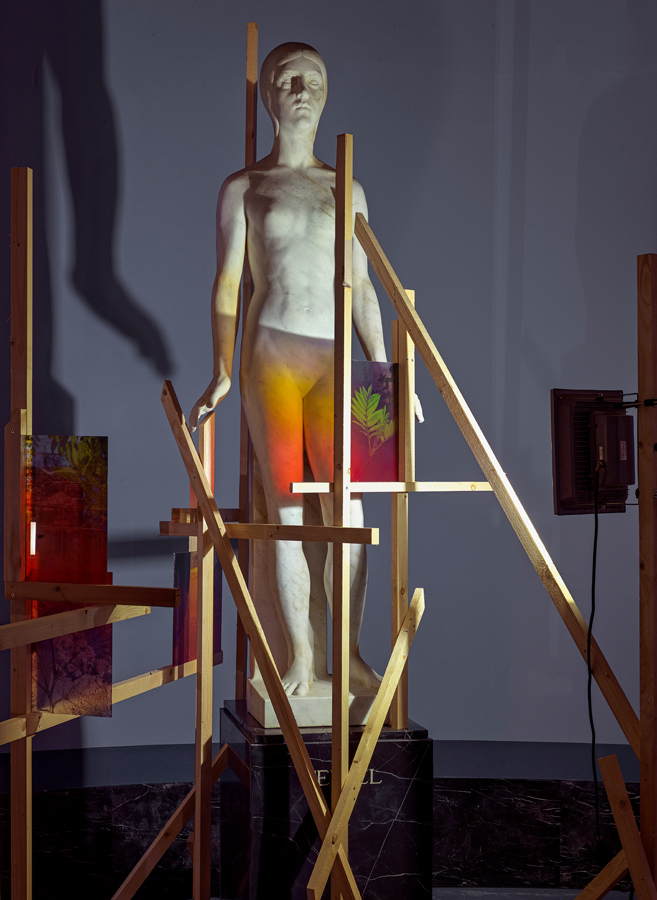
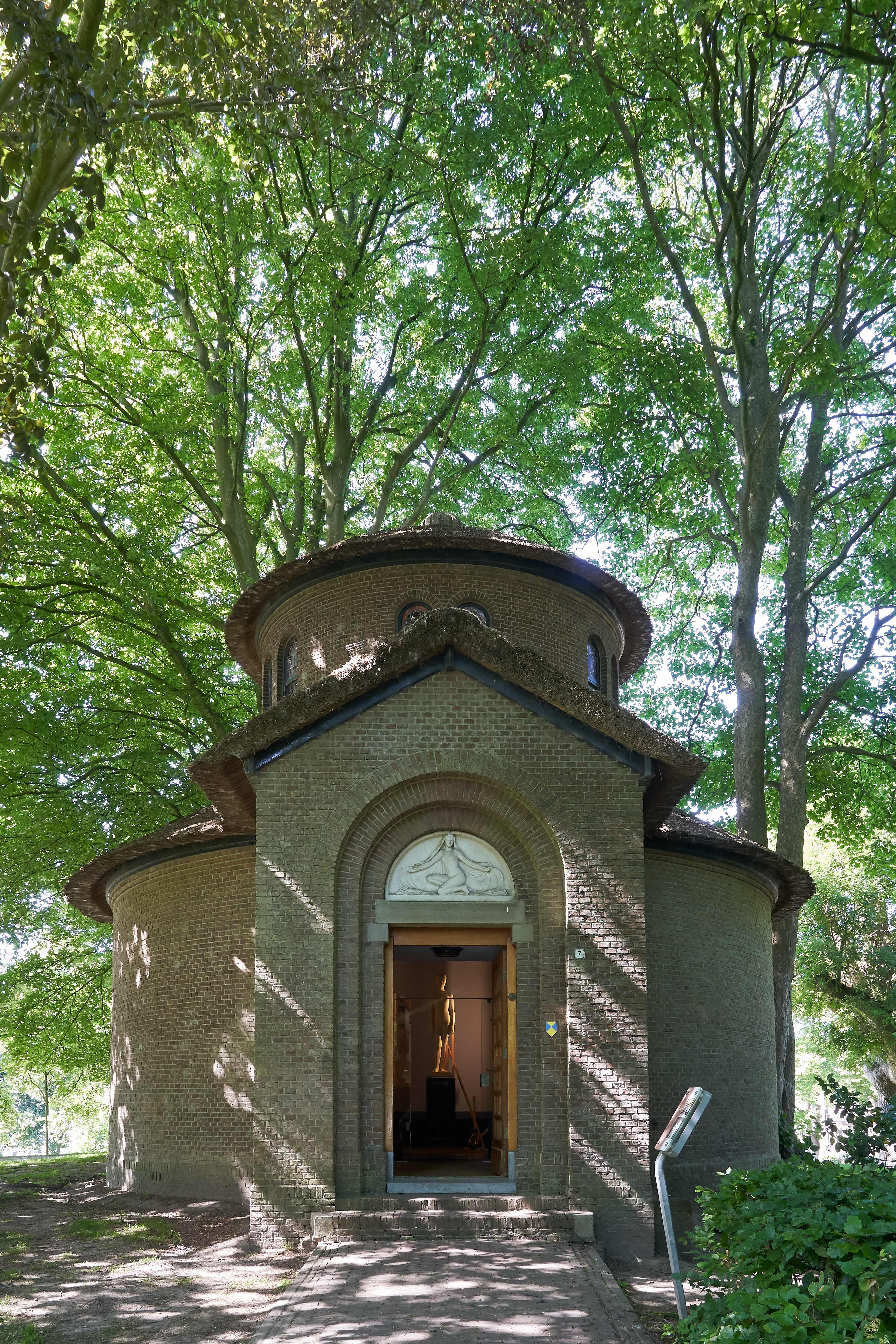
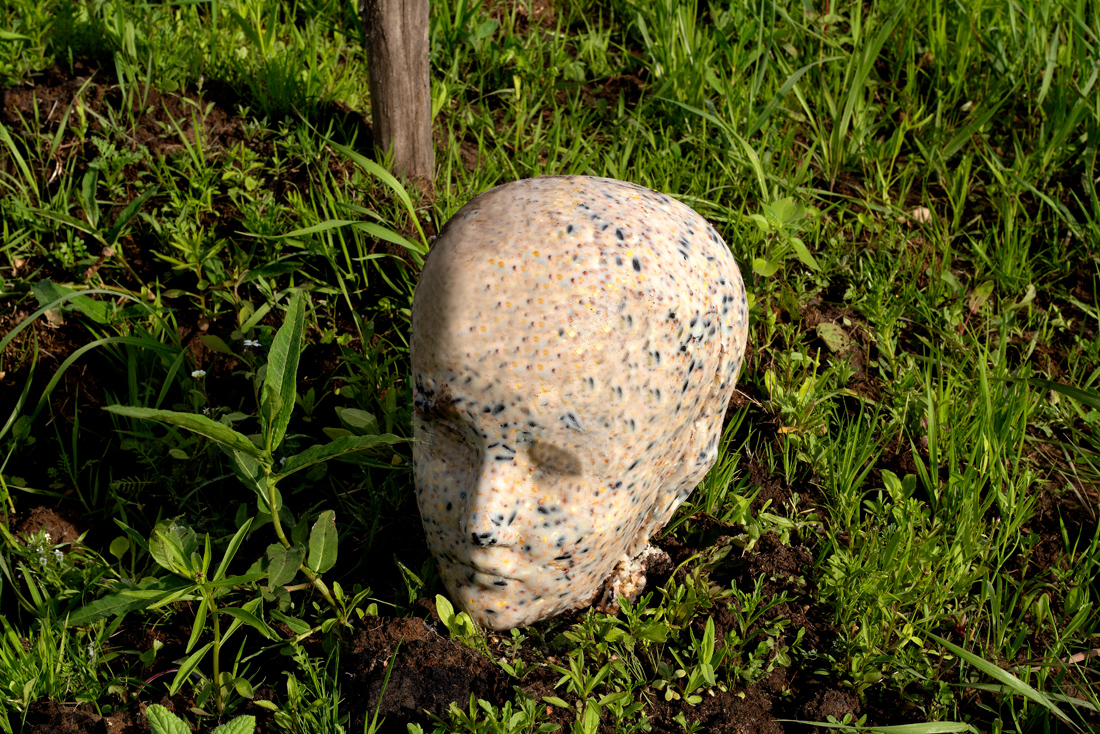
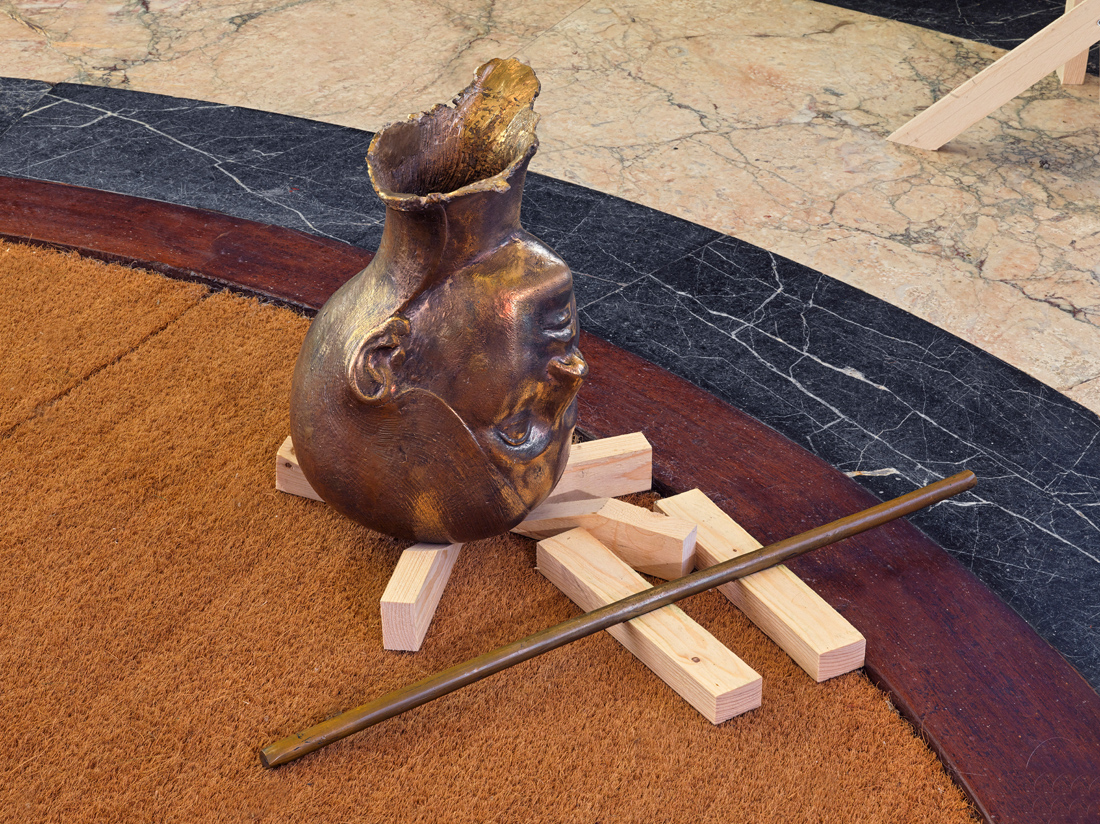
<em>Liminal Spaces</em>, 2025<br/> wood, floodlights, bronze, rowan, linden, hornbeam, sweetgum, plane tree, seeds, fat<br/>1400 × 1400 × 800 cm and undefined

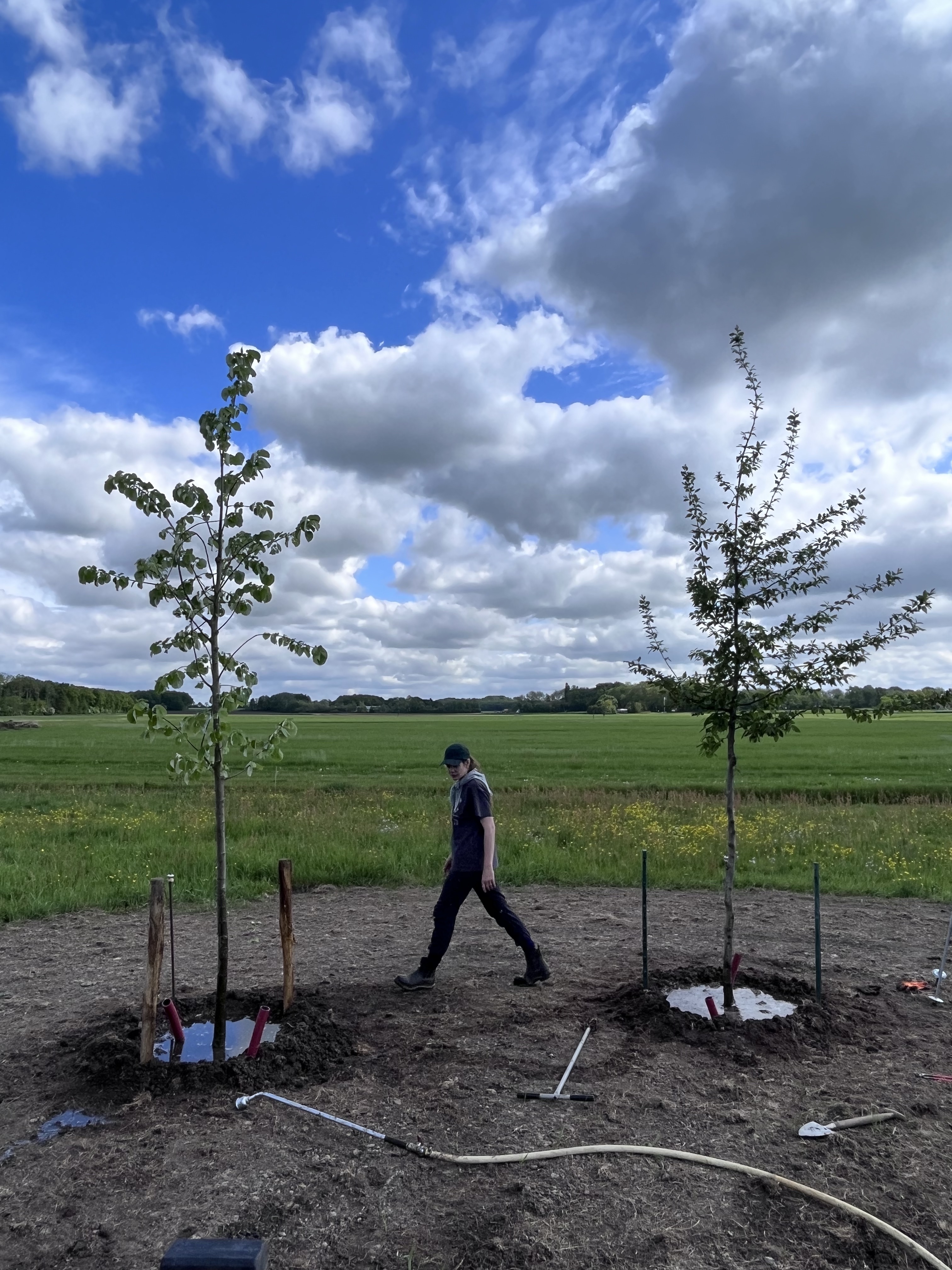
In her new installation Liminal Spaces, Van Imhoff uses the space of the Pier Pander Temple to create a new ecosystem, in which a symbiosis is created between her own work and that of Pander. She draws connections between nature and culture, between present and past, and sound and stillness. By deliberately placing the temple ‘under construction,’ Van Imhoff pulls Pander’s sculptures out of their standstill and, in a sense, sets them back in motion. A bronze copy of one of Pander’s sculpture heads, functioning as a bell or chime, underscoring the sense of time. At REST another layer is added: here, Van Imhoff has plowed a circle into the land, exactly matching the temple’s dimensions. In this circle, five trees were planted: rowan, linden, hornbeam, sweetgum, and plane tree – each representing one of Pander’s five sculptures, and expressing a continual process of growth. This ‘re-cycling’ of Pander’s temple into a circular natural form highlights the many stories and fragments that arise in the symbiosis between the different works.