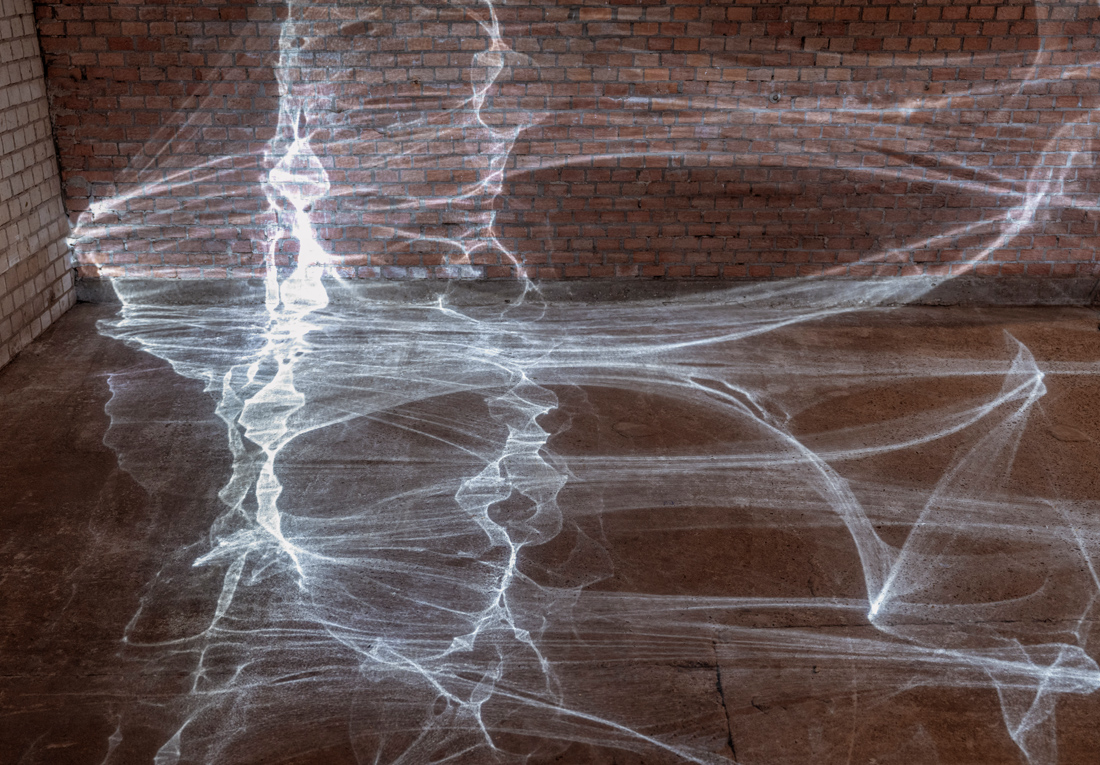
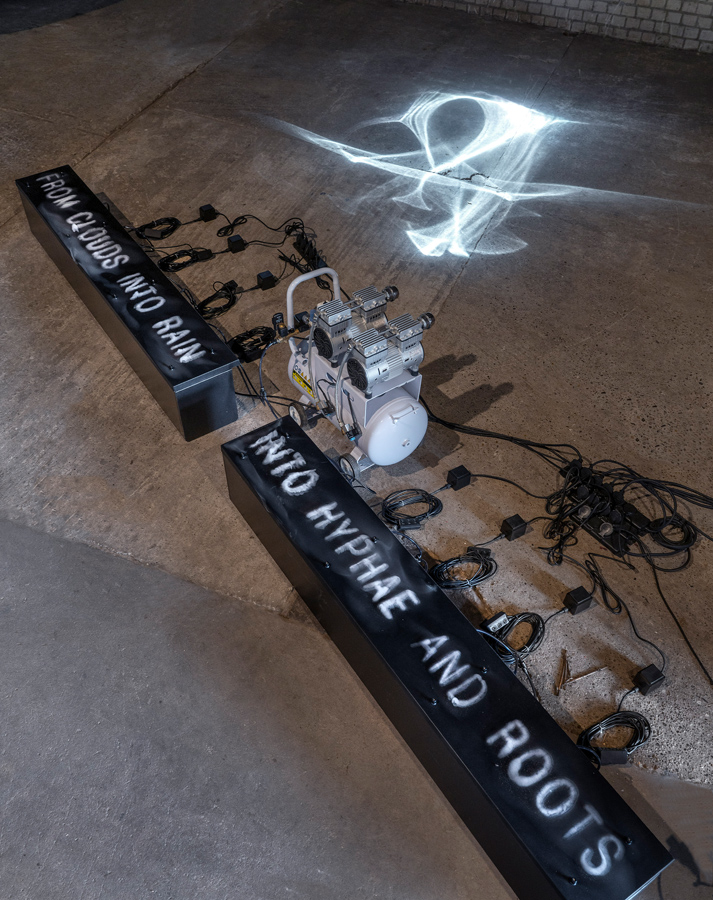
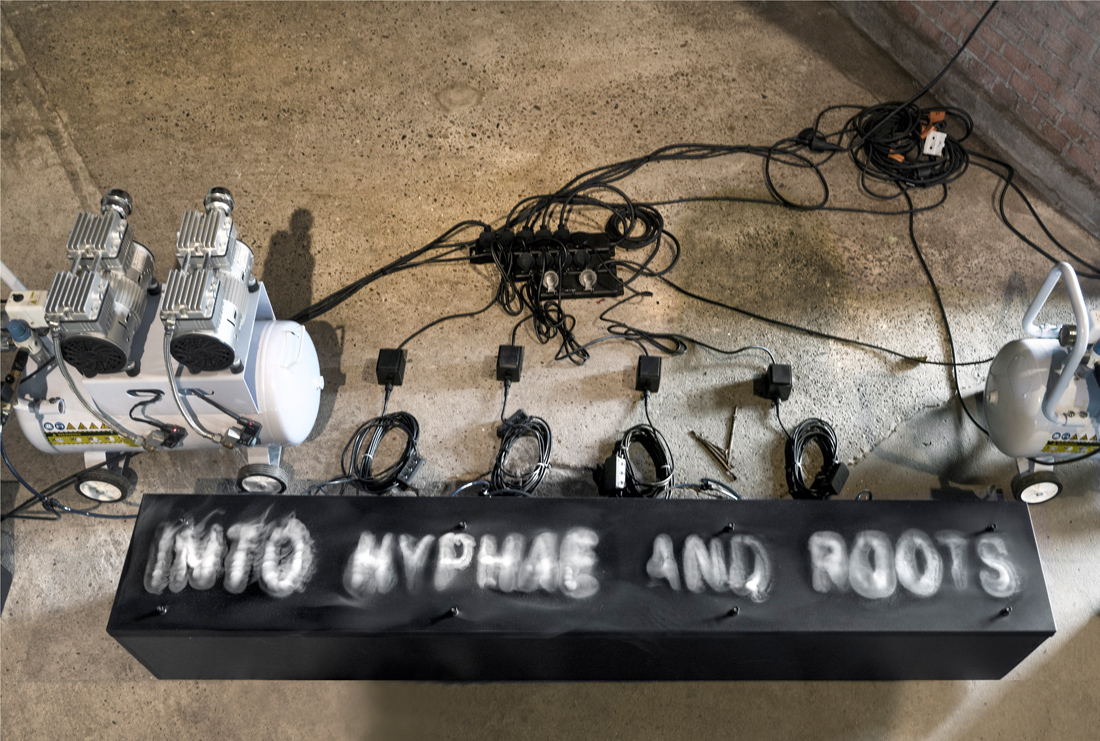
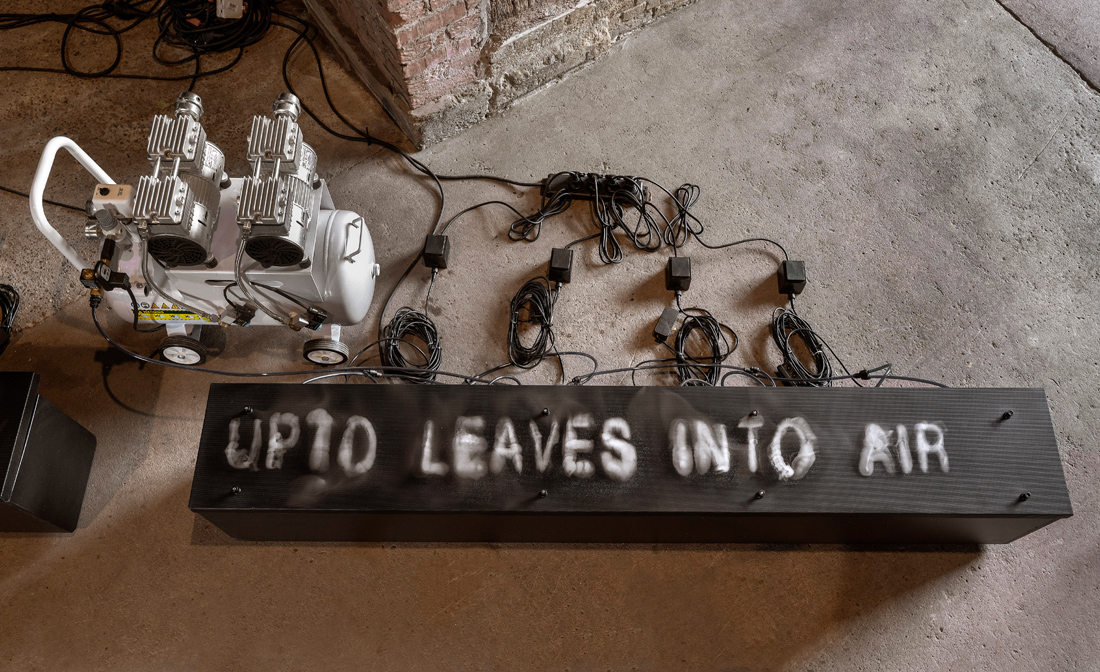
Hydrology (Variation #2) by Lennart Lahuis is part of his broader exploration of the way in which natural phenomena such as evaporation, erosion, and combustion relate to scientific disciplines and technological systems. His work for Two Hectare focuses on the natural element of water and its manifestations in the hydrological cycle. The installation presents a hypnotic display of the perpetual transformation of water through this cycle: from surface evaporation to condensation, precipitation, and collection as groundwater. Concise descriptions of the process appear fleetingly in the form of water vapor – textual snapshots that quickly evaporate. At the same time, the water in the installation itself remains part of this process, and is repeatedly reabsorbed into the same cycle. Lahuis thus explores not only the physical aspects of water, but also the connection between the experience of time and matter. On the one hand, there are the slow, geological processes that unfold over millions of years, and on the other, the fleeting moment of words that materialize and dematerialize into steam, with technology acting as a bridge between the tangible and the ephemeral. Hydrology (Variation #2) is an example of Lahuis’s subtle interweaving of scientific disciplines, technology, and natural processes. His work invites quiet reflection on the relationship between humans, time, and the landscape, opening a window into a world in which even water functions as a vessel of meaning.