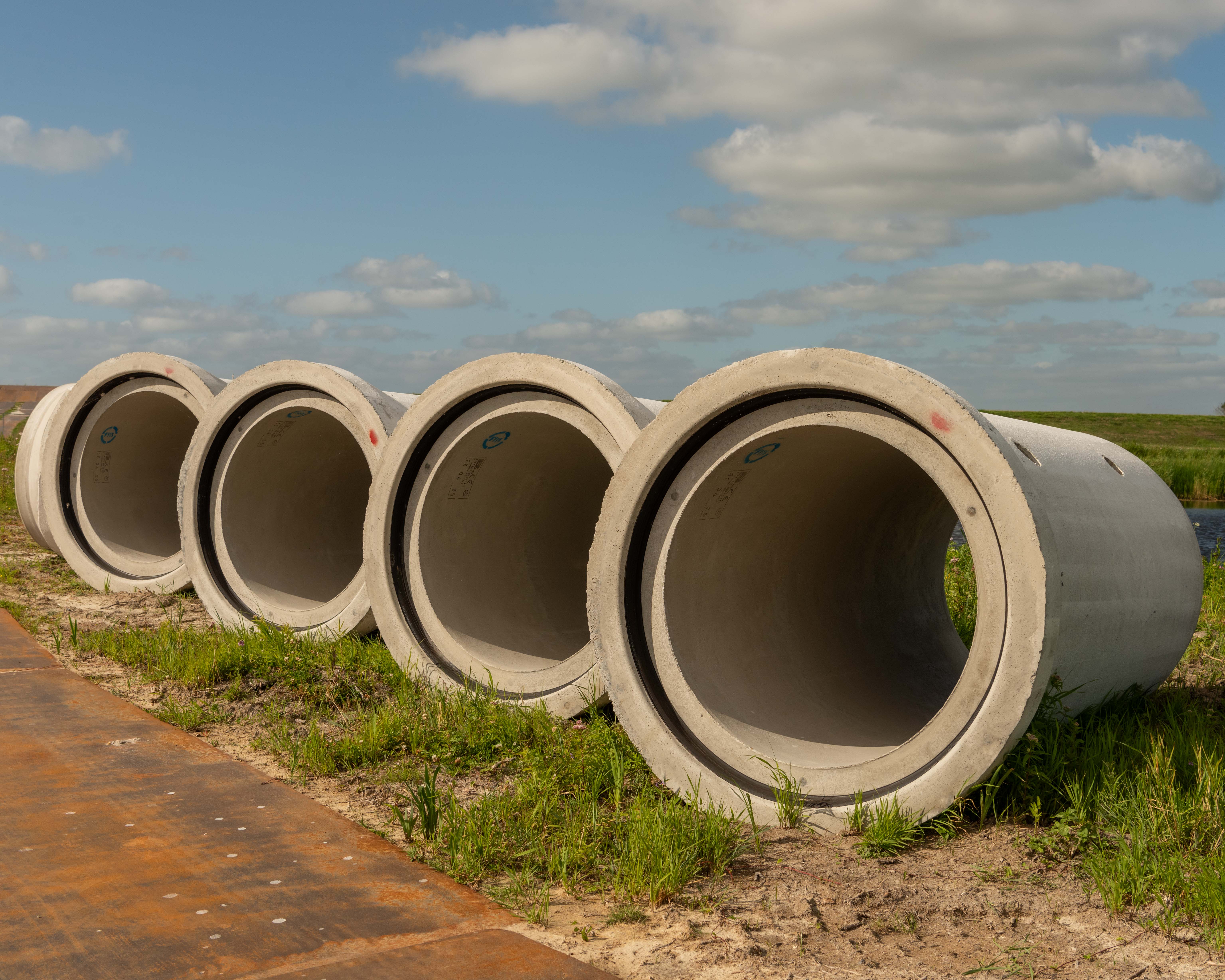
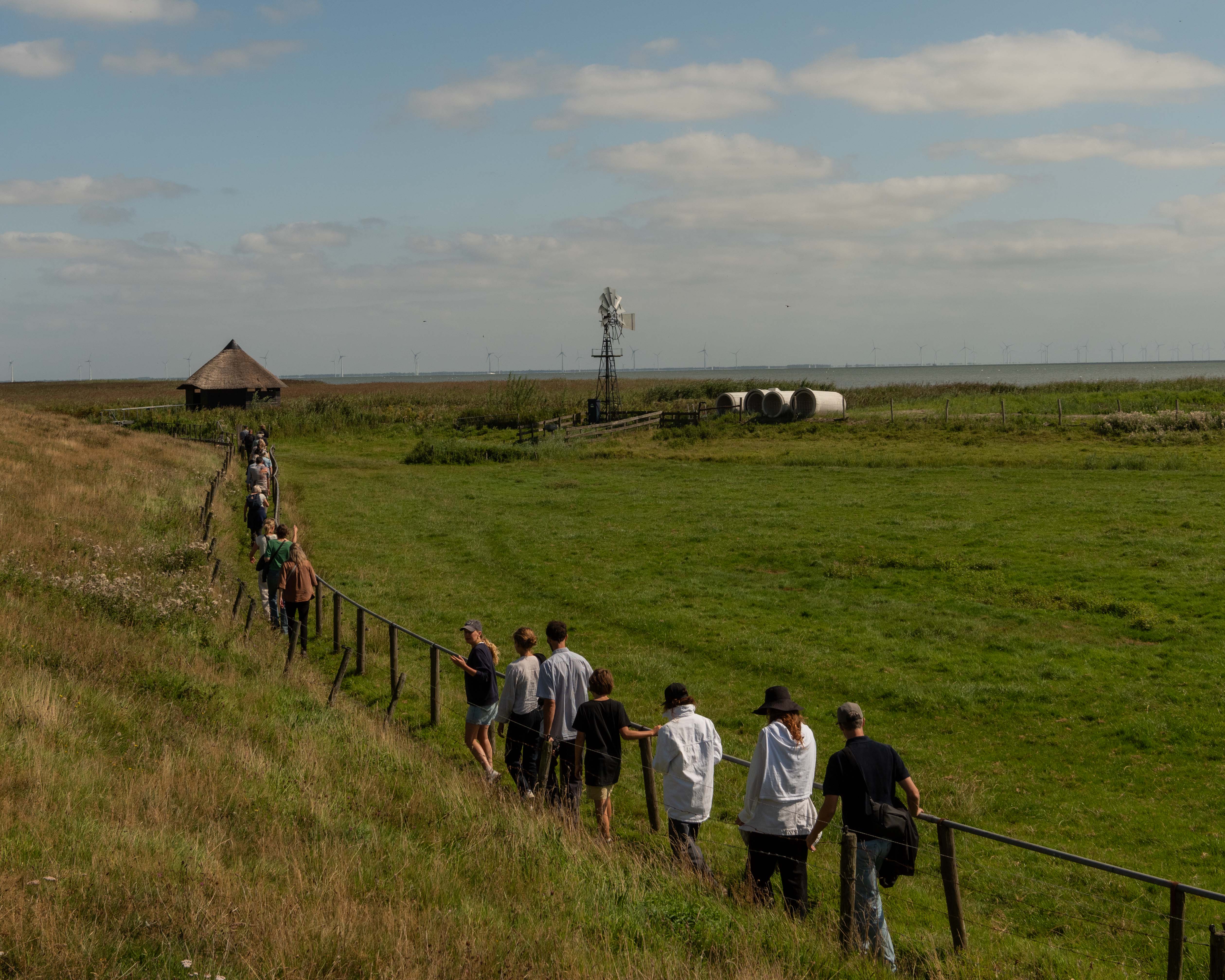
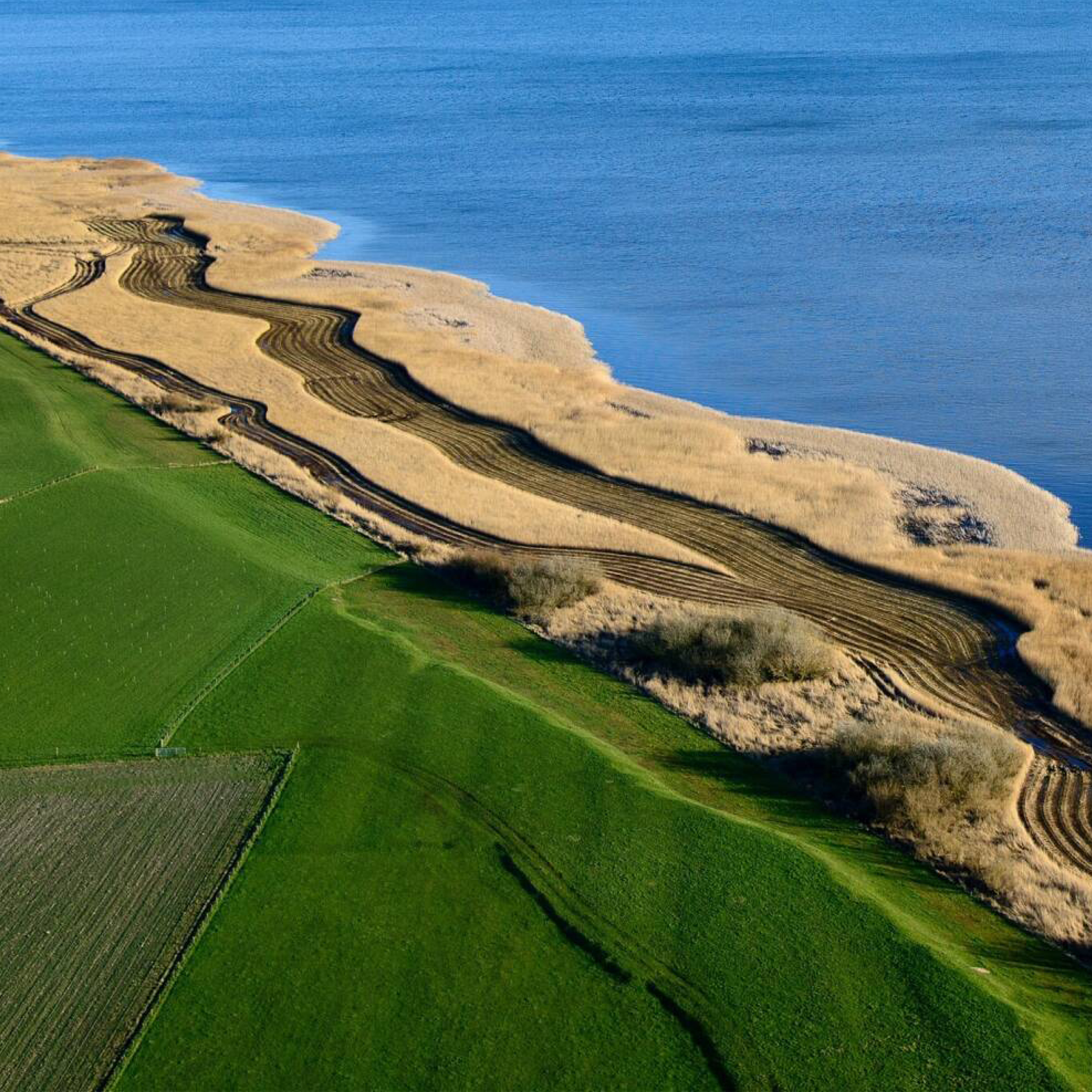
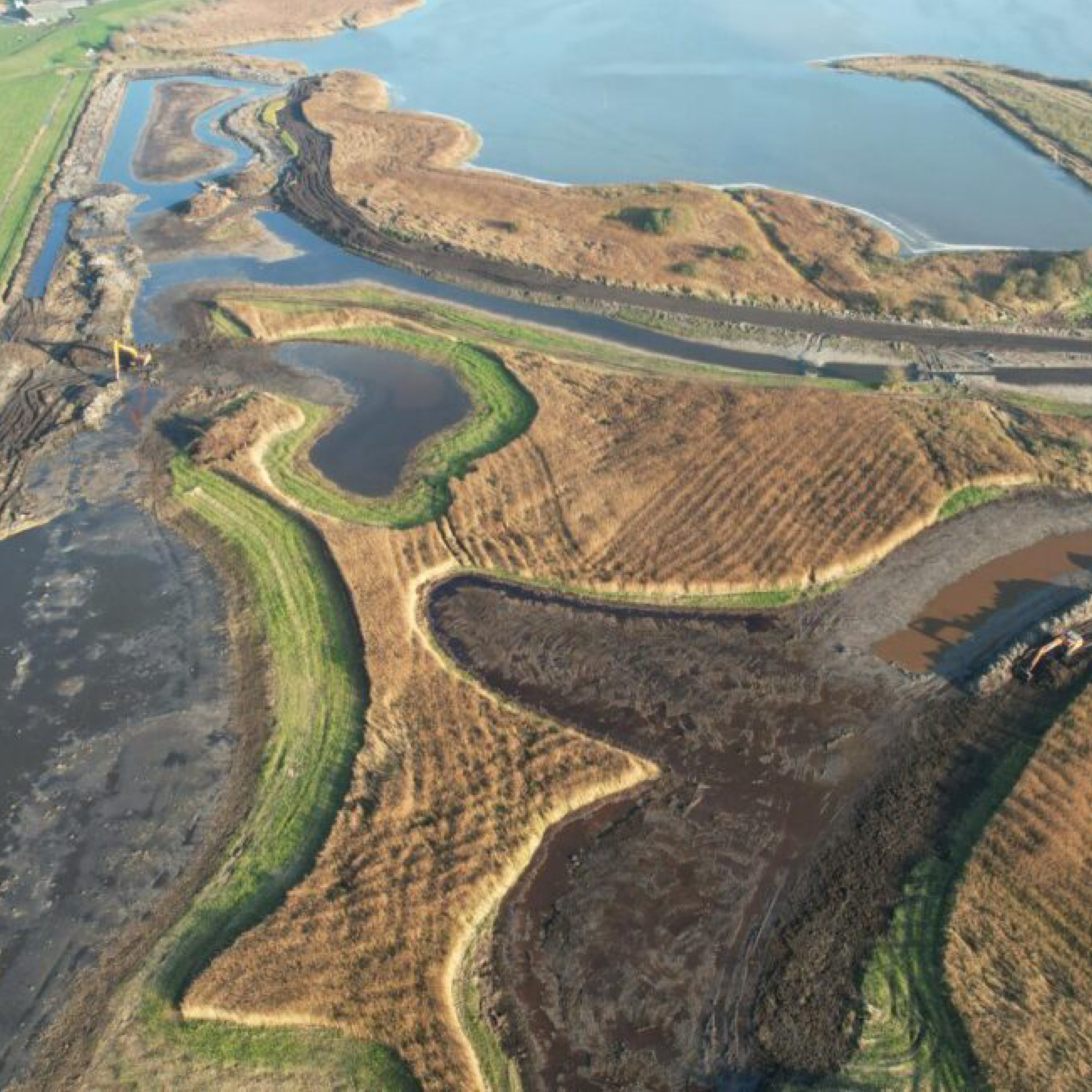
Lahuis’s Hydrology (Variation #2) offered a conceptual framework: water perpetually transforming through evaporation, condensation, and return, with fleeting texts appearing as vapor before dissolving again. At the Mokkebank, this cycle became spatial and ecological reality. Water levels determine where marsh birds can breed, where fish find sheltered spawning grounds, and how a climate resilient coastline takes form. Birds, often the first responders to ecological change, act here as living indicators of shifting balances between land and water.
Art, ecology, and water management converged in the recognition that both landscape and meaning are in constant transformation. The marsh is not a fixed nature reserve but a process, shaped by policy, technology, sediment, and migration, much like water itself: circulating, adaptive, and carrying memory into the future.