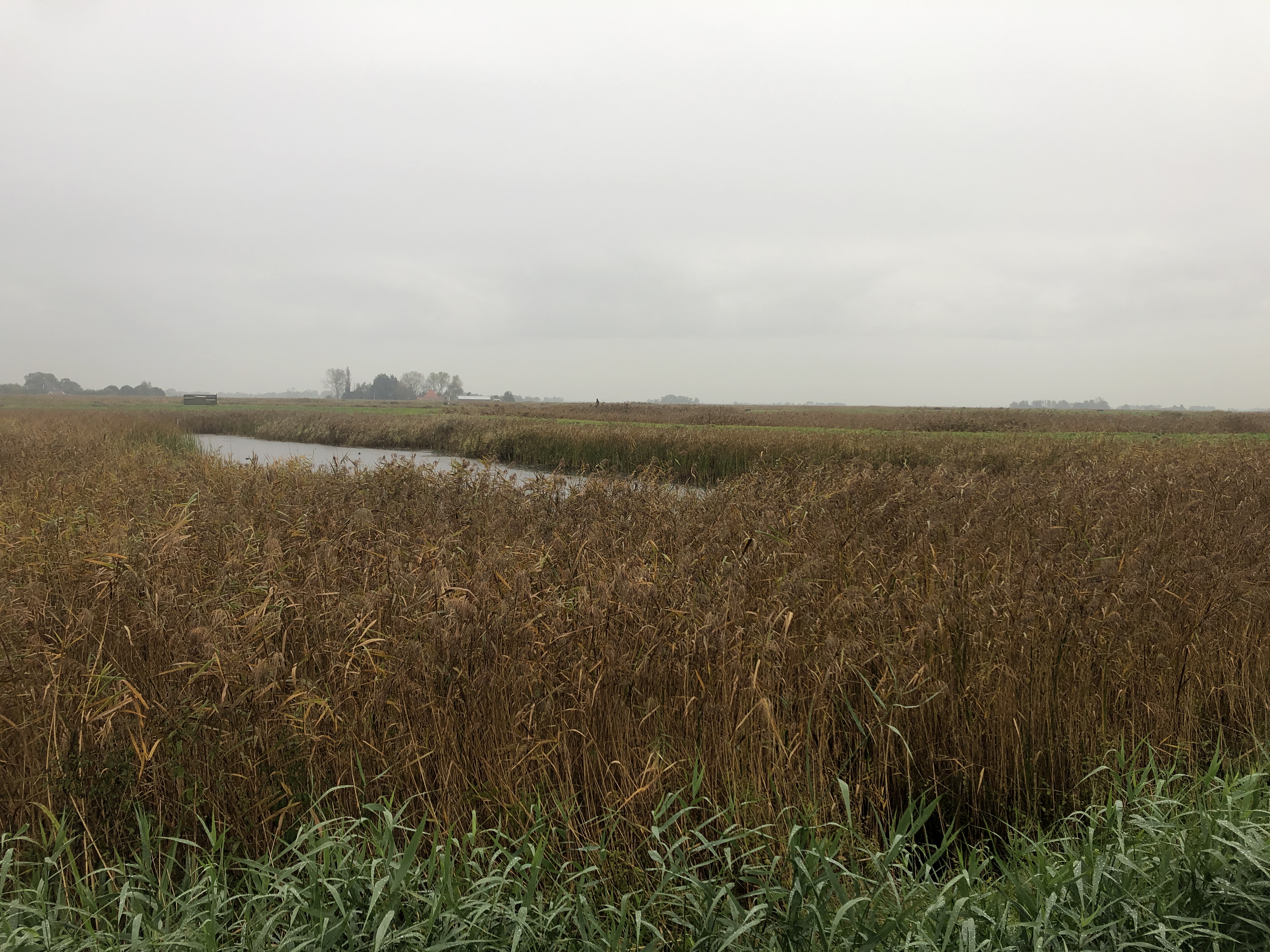
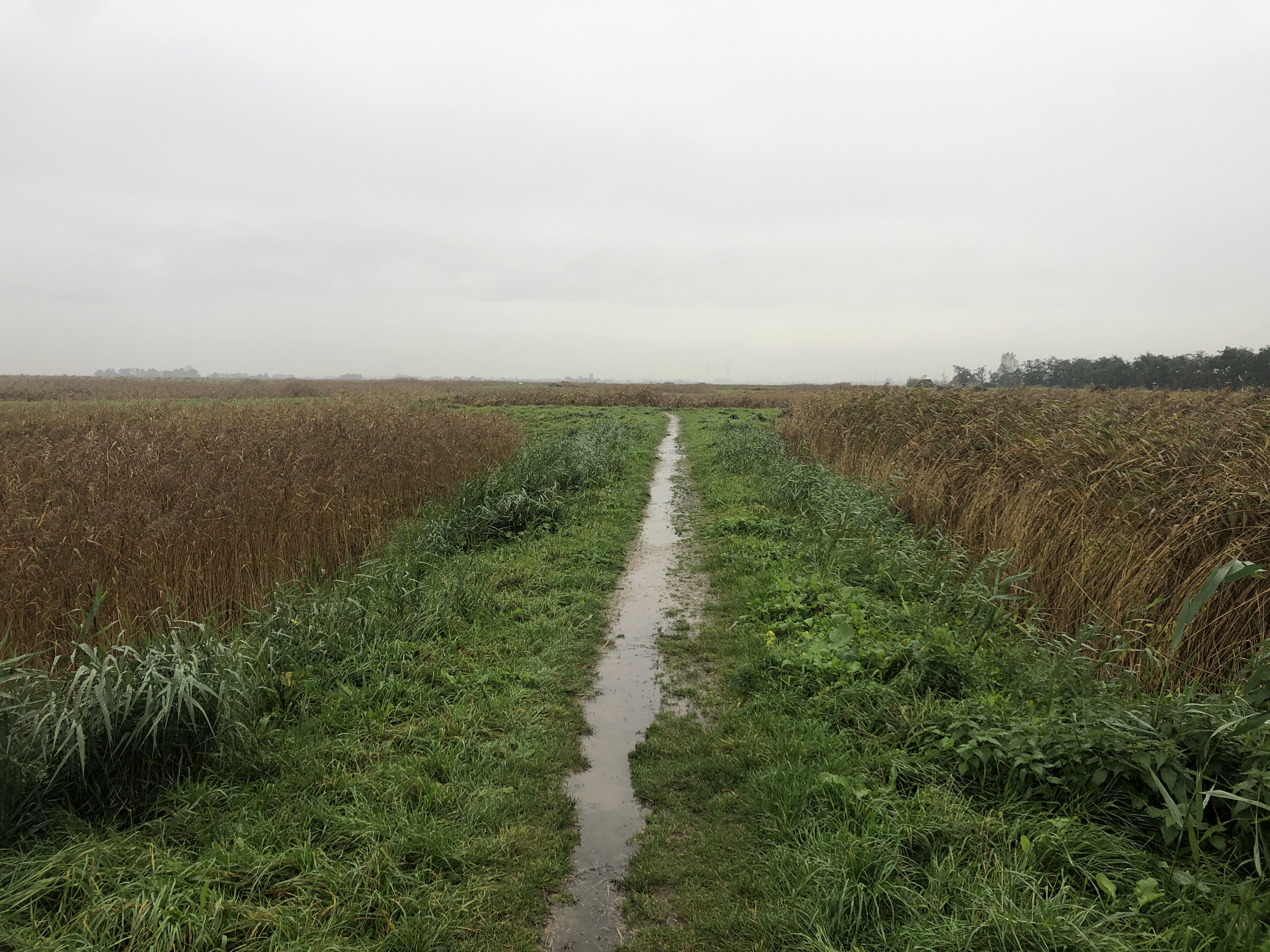
At first glance, there is nothing strange about the natural reserve north of Amsterdam. Behind a row of willow trees lies a vast landscape of reed marshes. A grid of wide strips of grass with zigzagging walking paths crosses the water. Reed warblers flutter among the stems, and a few dogs run around their owners. It is noticeable that all the ponds are rectangular and the intersecting canal has dead-ends on both sides, but the old peat industry has created more unnatural ponds in the past. Nothing suggests that the Volgermeerpolder is the most polluted area in the Netherlands; tens of thousands of barrels of chemical waste lie beneath the ground.
Rachel Cusk writes in Marble in Metamorphosis: "What makes certain things last, while others decay and are forgotten?" She attempts to unravel human culture by observing remnants of marble. Cusk wonders if we only preserve what fits into the self-image we want to see. Palaces, sculptures, and furniture from classical antiquity in Greece and Italy are praised. Time has eroded their original meaning, allowing them to function today as a symbol of a united Europe. Similar marble objects from the Third Reich or the scars in the landscape from marble quarries also point to our past but are less visible. The beauty of marble, Cusk writes, is its endurance. Sculptures, quarries, and fascist architecture are not easily erased; each piece of marble bears witness to "the long account of human effort in plundering and shaping the world." Fragments have something to tell us.
In 1980, the first concealed toxic barrels surfaced in the Volgermeerpolder. After peat extraction in the early 20th century, the pits were filled with household waste, giving chemical companies in the region since the 1950s a free pass to dump toxic waste there as well. The busy landfill site, with trucks coming and going daily, turned out to be extremely dangerous, overnight it became a forbidden and fenced-off area. After years of research and legal wrangling over responsibility, the land was only cleaned up in 2006. Due to the variety of harmful substances, some of which will never break down in nature, so-called forever chemicals, removing the soil was not an option. A special plastic layer is now supposed to hermetically encase the gigantic toxic landfill forever. Just a few meters above lies our self-image in the form of a nature reserve.
Waste is not only concealed in the Volgermeerpolder. In the city garbage bags disappear into underground containers. The majority of waste streams are exported or incinerated, literally hidden beyond national borders. Of course, a lot of valuable materials are recycled, but a visit to the nearest recycling center on a Saturday afternoon shows that the "circular economy" is still a utopia. What is most shocking there is not only the sight of the quantity but also the orchestrated casualness with which products disappear into neatly arranged waste containers. In a moment and with the same ease, you can toss an outdated window into the "flat glass" bin. In less than a minute, you drive down the ramp and out through the barrier back home. Glass bottles, because they are made of glass only, can be easily recycled, but flat glass also consists of various synthetic sealants, films, and coatings. The clumped material of course doesn't naturally break into a thousand separate pieces when thrown into the container. The processing and exact extraction of recycled materials take place behind closed doors. Our constant concealment of waste seems to reveal an uneasiness about its creation.
Cusk shows that a ruin from antiquity can still confront humans with their self-image centuries later. "A story is made of what survives." Today, according to sociologist Willem Schinkel, we are surrounded "by the ruins of capitalism." The remnants of contemporary consumerism are harder to observe than marble; they are evaporated or hidden. Greenhouse gases and pollution only become visible in the form of increasingly severe natural disasters. A consequence we will be confronted with for centuries to come. Perhaps it is a good start to make fragments more visible. To let all ruins become part of our self-image. An image that we may eventually dare to confront and maybe even learn to appreciate. Hiding waste is pointless, sooner or later it will come to the surface.