R
E
S
T

Rural Relations

Rural Relations

Rural Relations

entry n°
R-693
type
event
themes
design
ecology
education
date
6 December 2025
December 2025
2025
 – 
location
by
DesignLAB Rietveld Academie
with
REST

The exhibition Rural Relations invites you to explore the complex, interwoven relationships a landscape can hold. By shifting the perspective away from the human and towards the land, the works on show encourage to reflect on the plural relations within the rural ecology and its multi-species communities.

Starting from a host of contexts such as the soil, water, wind, crops, seeds, minerals, & architecture, the designLAB students of the Rietveld Academy present works creating dialogue with the sites materiality, inhabitants – both human & more-than-human, its ecologies & and histories.

Notepad, by Milo Egsgaard

The notepad you’re holding between your fingers, allows you to take notes and draw sketches, while walking around the exhibition.

When I visited REST for the first time back in September 2025, I walked around, taking photos, and drawing my first impressions of the place. I was very occupied with what voices we as humans give to plants, animals and nature in general, and I have included some of those drawings in this booklet, so they could maybe inspire you to think about the same thing (or not, whatever).

I wanted to give you the opportunity to experience that same thing. Well, not the completely same thing, cause there is a lot of new art, and the weather is different, and you are a totally different person, with a profound and unique perspective on life, but you get the idea!

So take your time, find an empty spot on the pad (sorry, I know it’s already quite full, but I had to include a lot of information about my classmates’ works - boring, I know).

But take notes, draw what you’re looking at, write a diary entry about your crush or make a grocery list for the weekly weekend shopping - honestly whatever you feel like. When you leave for today, you can chose to take the pad home with you or leave it or some pages from it here. I would love to see what your first impressions of REST were, and I am sure Saskia and Arnout would as well.

Have a nice walk!

DETECTIVE FOR DIRT, by Pablo Cueto

Because sometimes the land is lying, and sometimes it isn’t.

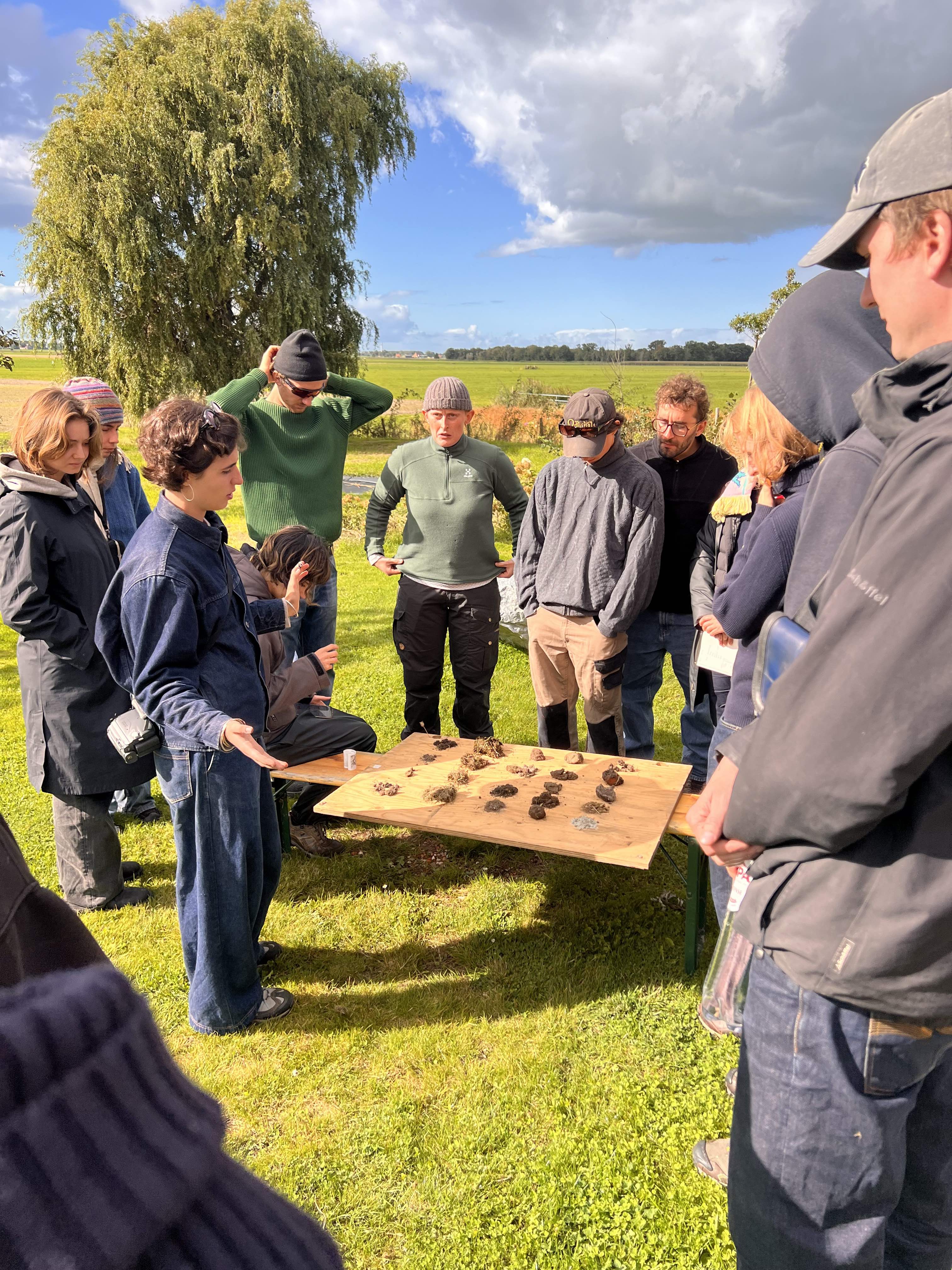
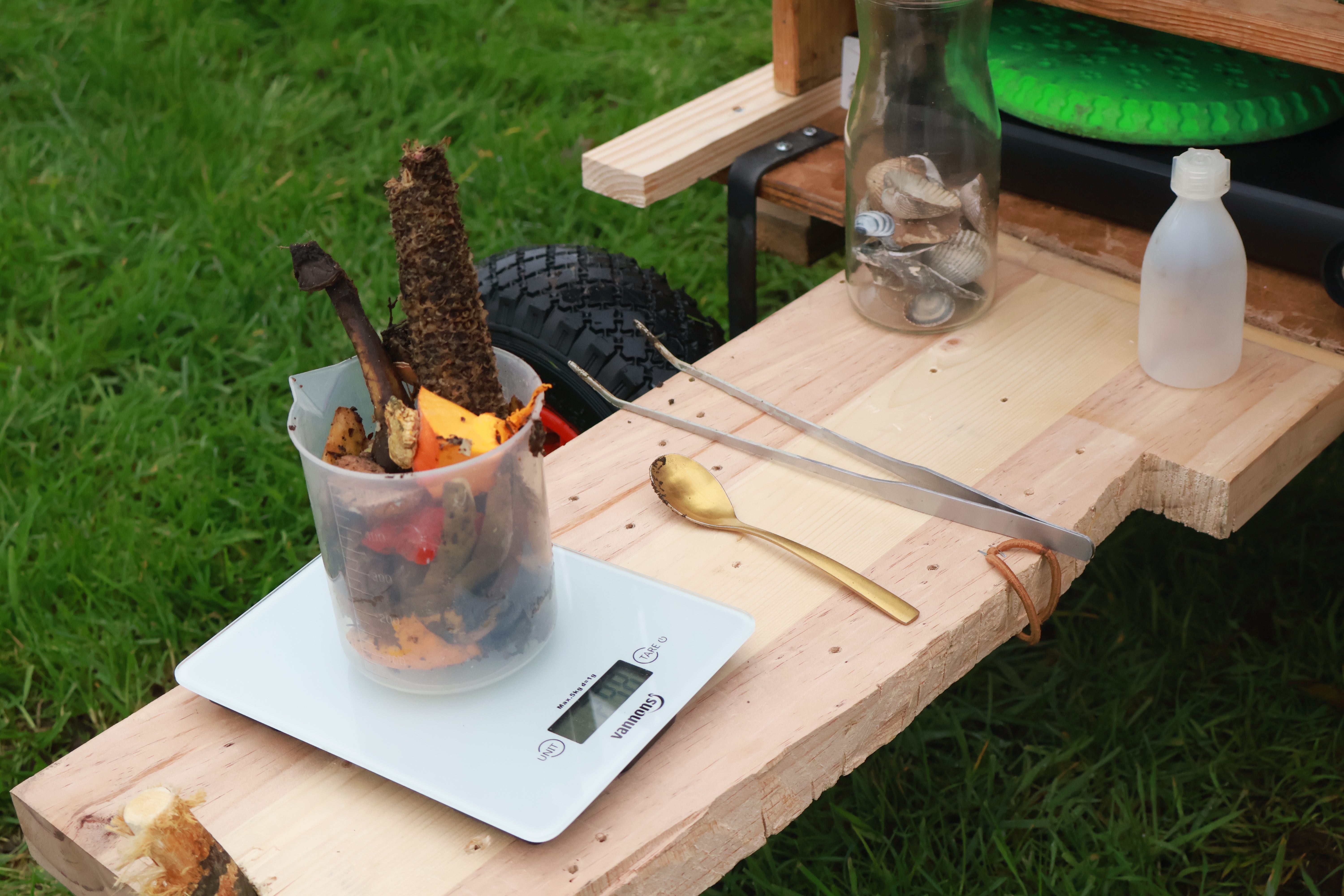
Your land… it talks. Sometimes politely, sometimes in ways that make you squint at a patch of grass and wonder if it’s plotting something. At Detective for Dirt, we listen, or at least, we try. We look for signs: petal-less flowers, anxious soil, moles moving a little too purposefully. We take notes, form opinions, and occasionally stare into the compost pile long enough that it feels like it’s staring back.

We examine soil. Water. Compost. Plants. Creatures. Whatever that thing is behind the shed. We collect data, sometimes meaningful, sometimes mostly interesting. We are thorough-ish. And we are convinced, deeply, deeply convinced, that the truth about your land is waiting, just beneath the surface.

After our investigation, you receive a Certified Land Health Report: written in a dubiously positive way. And if you like a little flair with your reassurance, we can provide an engraved Land Score plaque. Display it proudly on your wall or keep it in a drawer and glance at it nervously.

Detective for Dirt.

We dig. We observe. We care.
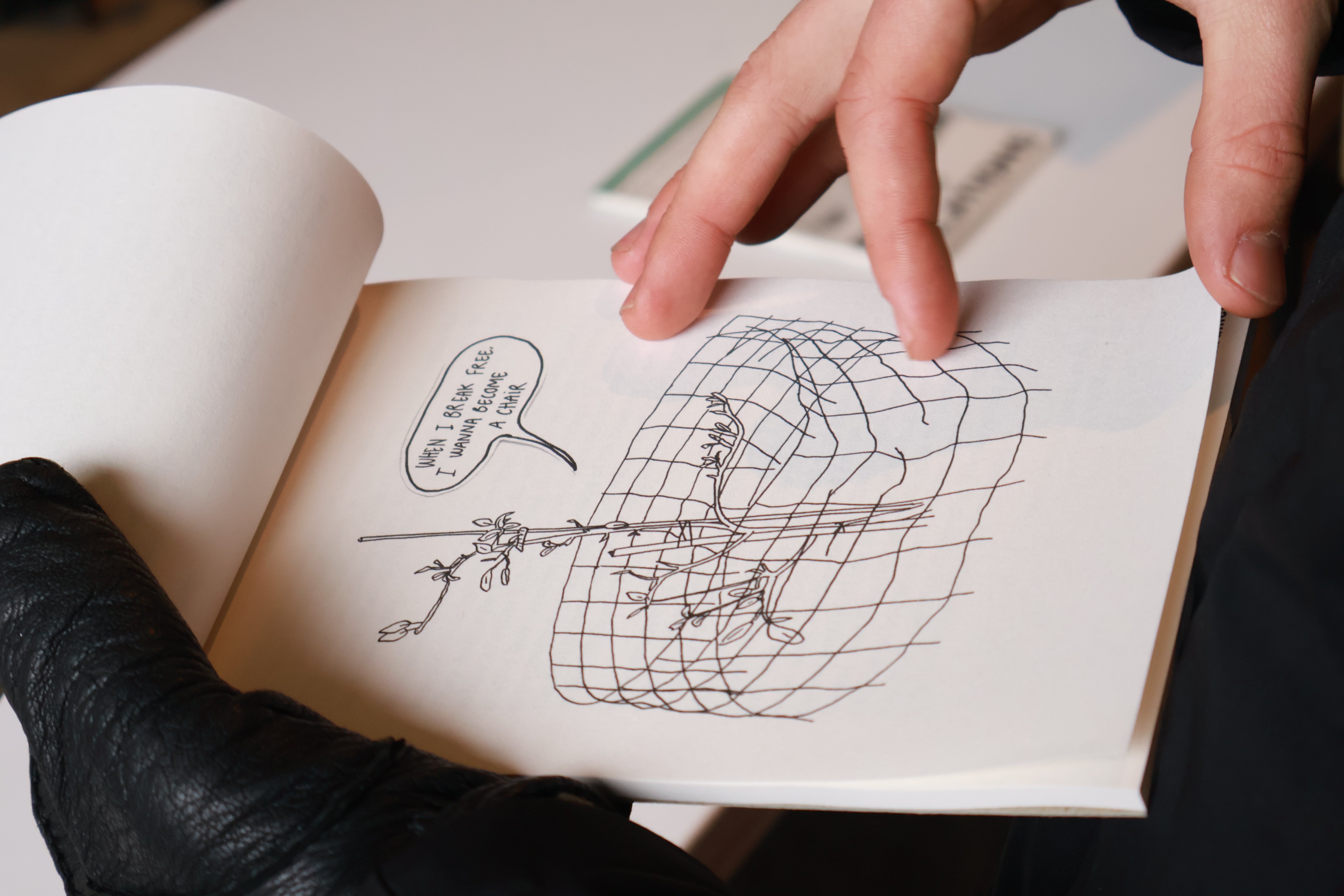
<em>Notepad</em>, <br/>Milo Egsgaard
<em>DETECTIVE FOR DIRT</em>,<br/>Pablo Cueto

Invade/Abduct, by Karl Emil Krebs Birkeland

Japanese knotweed is considered one of the most pestilent invasive species in Friesland, and in North- Western Europe at large. Also known as Asian knotweed, the bamboo-like plant was brought to Europe in the mid 19th-century primarily as an ornamental garden plant. Quickly escaping cultivation and spreading into the wild, it became a hardy invasive species, causing damage to property by growing through walls and asphalt.

With Invade/Abduct, the Japanese knotweed becomes a symbol of nature’s unruliness and humans’ failed attempt at curating and controlling it. While also resituating it to its aesthetic and ornamental European origin, the work portrays the irony of classifying a species as invasive, when it in fact was removed from its natural habitat in East Asia and abducted against its will.

Emphasizing the plant’s inherent defiance to the human concept of borders and insistence of private property, Invade/Abduct is installed at the very edge of REST, gesturing growth towards, and invasion into, the neighbouring estate.

What if, by Balthazar Deslandes

Am I the only one who sees that this landscape — so often perceived as natural — is in fact entirely shaped by human hands? Can we still call it “nature” when its very existence depends on us? Without the polders and dikes — built progressively from the Middle Ages through the twentieth century to make these regions habitable and cultivable — what would this place look like? Should we imagine ourselves standing in open sea, on what once were seabeds?

As my research progressed, I developed a growing fascination for this “industrial haven of peace.”

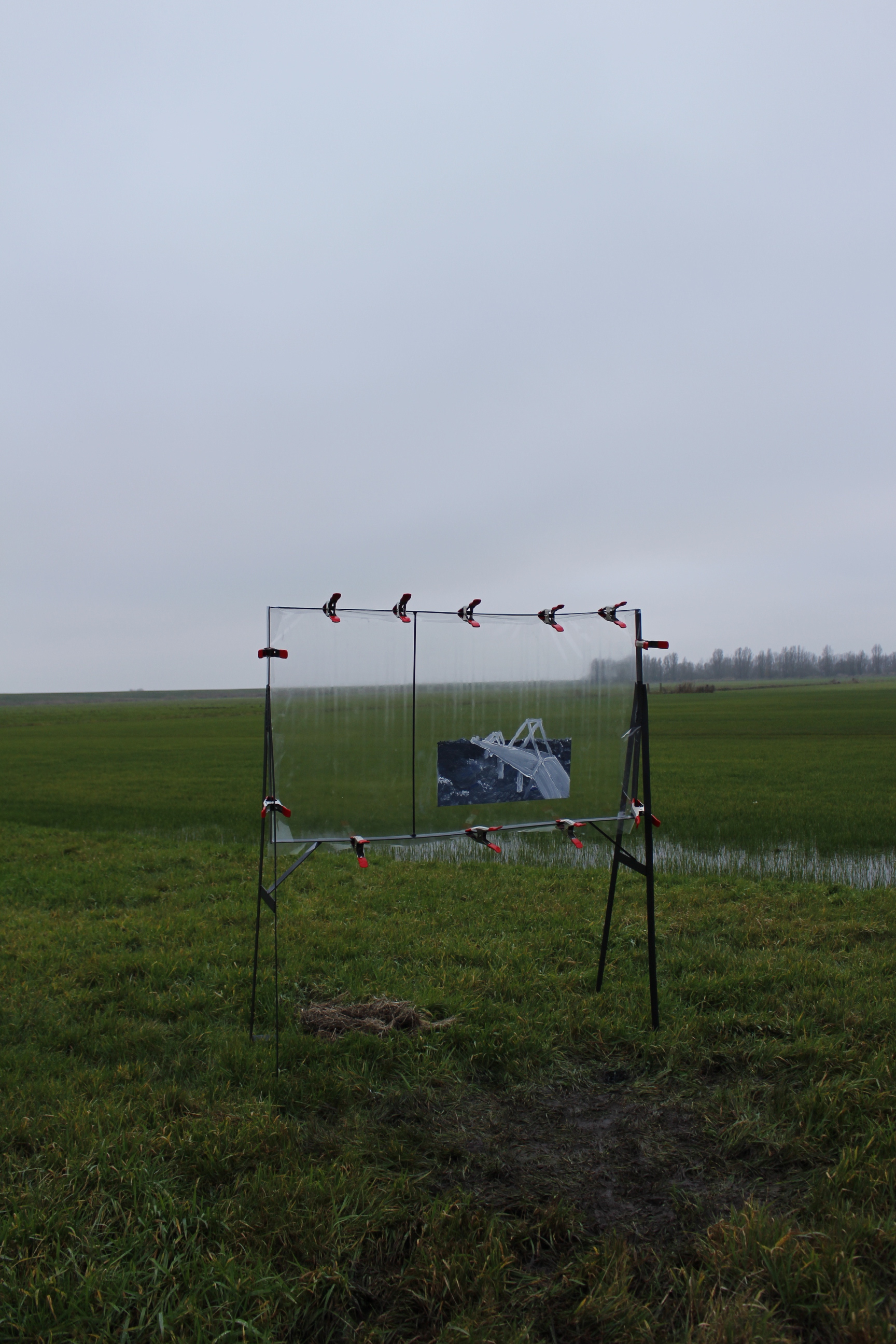
For this series, I selected landscapes that felt strangely foreign, almost detached from their own reality. Into them, I introduced screens — porous surfaces between the visible and the speculative — suggesting what Friesland might have become if polders and dikes had never existed to shape it. These tools invite viewers to imagine a submerged geography, a territory where the history of hydraulic engineering displaces the apparent naturalness of the land.

Failed Flight, by Amelia Urdaneta Uribe

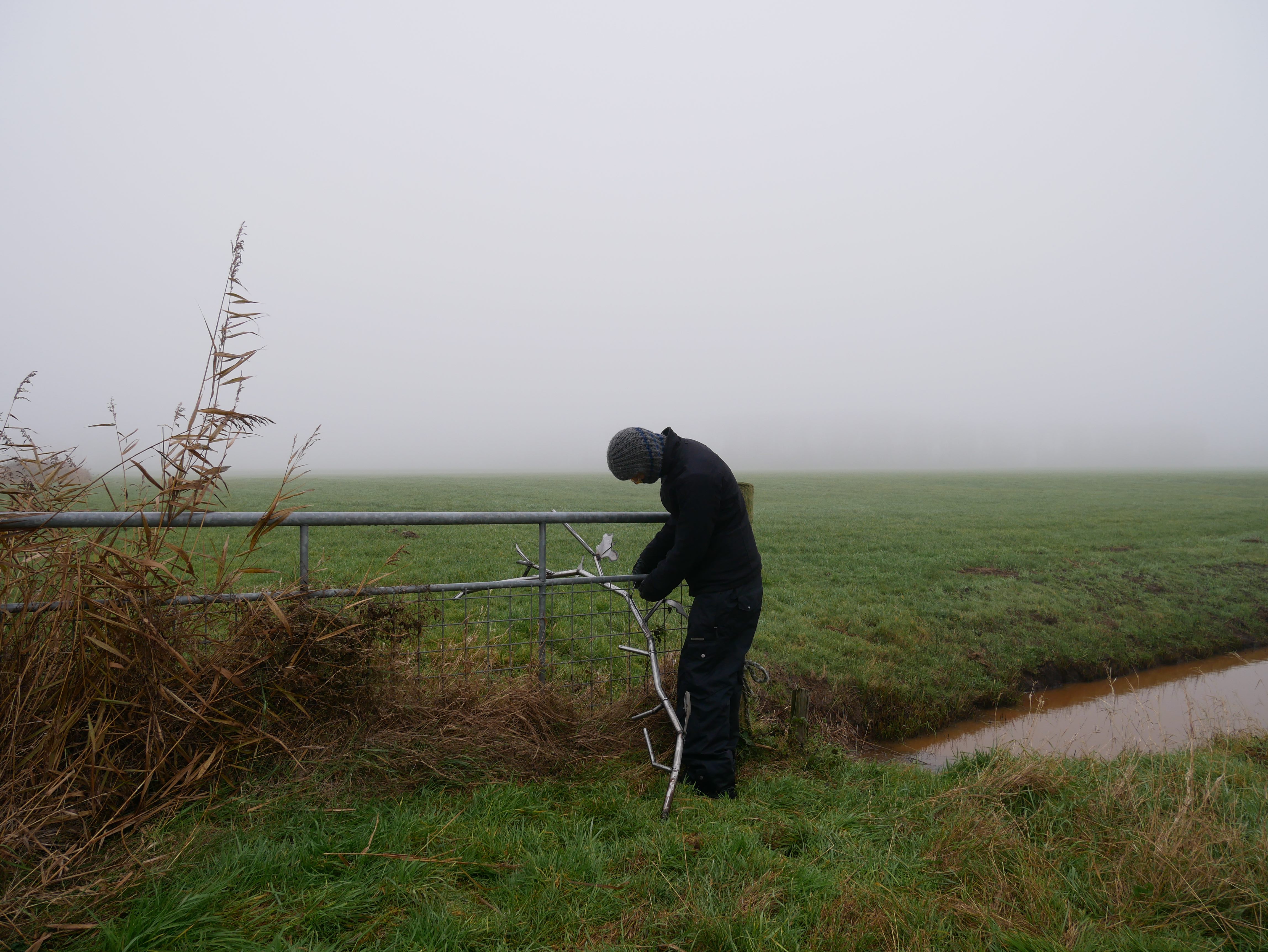
Stainless steel, handmade paper from dry grass taken from REST, located in Friesland.

Two years ago, I was on a plane that hit a flock of birds. The birds died, the plane was damaged, and for a moment everything felt fragile — like nature and technology had violently collided in mid-air.

I felt that same discomfort recently on my way from Amsterdam to Friesland, staring at massive windmills turning out in the ocean. They’re graceful like birds, built to create clean energy — but they are also replacements. Sculptures of flight made for us, not for nature.

Failed Flight is about that uneasy space between what is natural and what we design to serve ourselves. About how we try to imitate nature, even as we continue to push it aside.

<em>Failed Flight,</em><br/>Amelia Urdaneta Uribe
<em>Invade/Abduct,</em><br/> Karl Emil Krebs Birkeland
<em>What if,</em><br/>Balthazar Deslandes

“Eluded", by Oonagh Remkes

My personal relationship with sound is a complex one - I am someone who really despises many normal, day to day sounds. I’m often drawn away in solace within my headphones; disconnected from the world in an attempt to protect myself. Living in cities and being in crowded environments is something I try to escape when I can. Therefore, I decided to use my sensitivity for and relationship to sound, both negative and positive, to dissect it and deliver these feelings to others through a soundscape.

I began this work as a challenge for myself, to listen closely instead of blocking out. Exploring both the Friesian landscape, and that of my own city of Amsterdam, with headphones and a recorder, I discovered things anew with fresh curiosity, observing occurrences as a shadow cast to the ground.

The journey thereafter led me to dive through recordings I had been making on my phone over the past few years; sounds I was either entranced by or repulsed by. Gathering audio from my time living in Australia, Japan, and the Netherlands, encapsulating my strenuous relationship with city living, and rural escape.

In this work, I try to convey the emotions I experienced when recording the sounds and while piecing them together. The anxiety connected to the sounds of the city, the peace I feel in nature, here at Rest, as well as the sense of growing community experience with those around me. I wish to allow a short moment where one loses themselves in sounds familiar and unfamiliar. To elicit emotions ranging from joy to anxiety, peace to anticipation, nature to city.

Aeolus, by Olivia Garcia-Tola

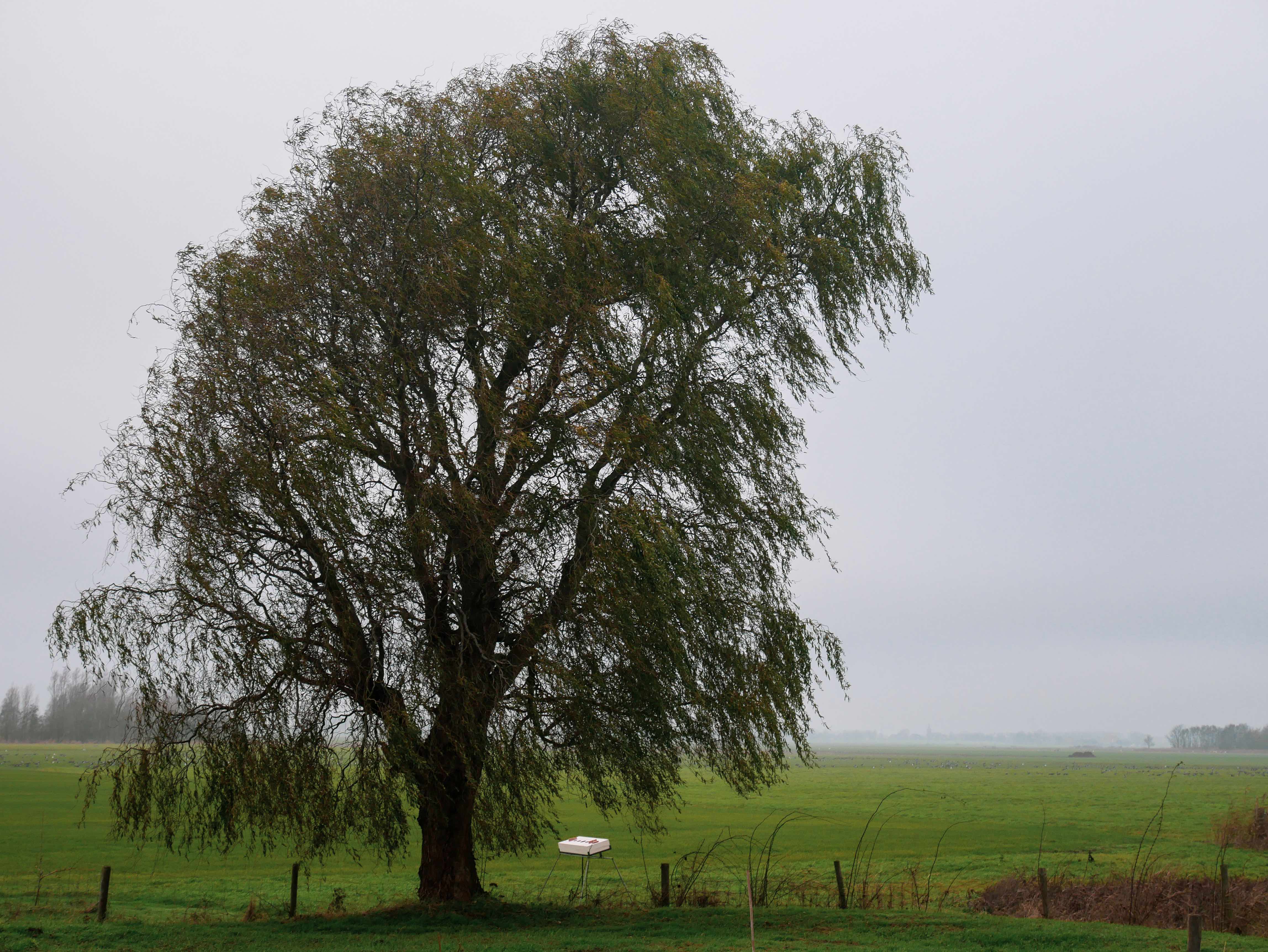
Three wind harps are spread around the site: one connected to the ground, one to the sky, one to the body. They play in (dis)harmony, activated solely by the wind, creating a transitional, dynamic soundscape of unique notes reminiscent of organs and whistles. As the air passes through the instruments, the winds’s voice gets amplified and distorted.

Another Ship of Theseus, by Lars Kramer

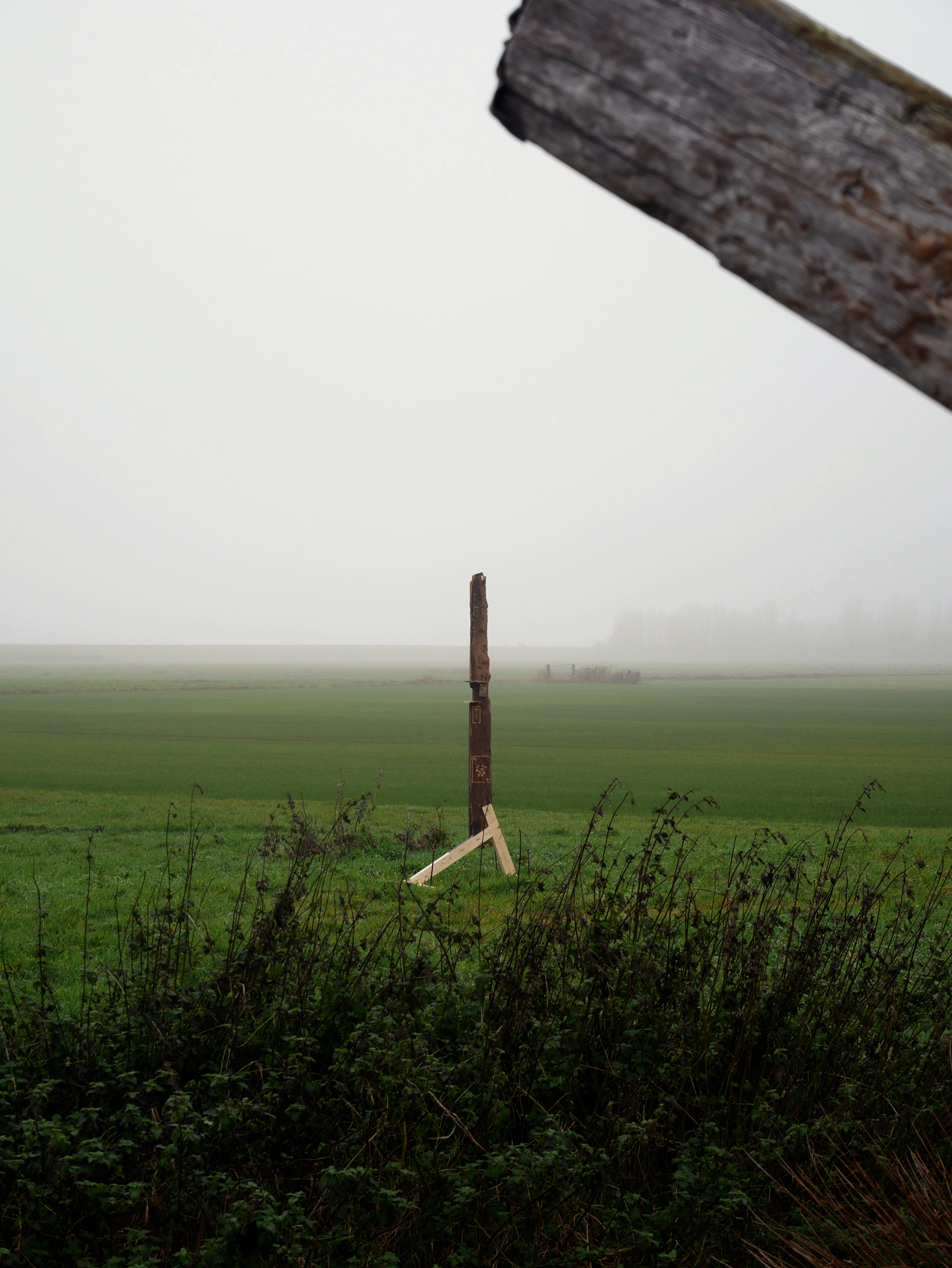
Another Ship of Theseus is an ode to marks.

And, to the dwelling as a vessel of these marks.

Imagine a farmhouse. Think about its wooden structure, the carefully carved edges that interlock with other beams. Think about the casted metal nails that have been inserted into the structure with great force and their rigid edges created by layers of rust.

Now think of how years go past and the wooden structure of the house slowly starts to change. Some beams get things added to them: a metal hook to hang a rope from, a nest built by a bustling pigeon, a reinforcing wooden plank. Other beams get altered in other ways: little wood worms carving their movements or human hands carving an arbitrary 1672 AD in it.

After even more years have passed by, imagine two farmers having a conversation. One might say: “That farmhouse is not the same farmhouse as it was after all those alterations.”, while another might say “It is still the farmhouse as it used to be, even after all those changes.” They debate which of them is right.

But, the wooden beam is not concerned with who is right. It has stood there, with its body of alterations and interventions, and will stand there for another hand to come.

<em>Aeolus,</em><br/>Olivia Garcia-Tola
<em>Another Ship of Theseus,</em><br/>Lars Kramer
<em>“Eluded”,</em><br/> Oonagh Remkes

Little Rest, by Lise Feierabend

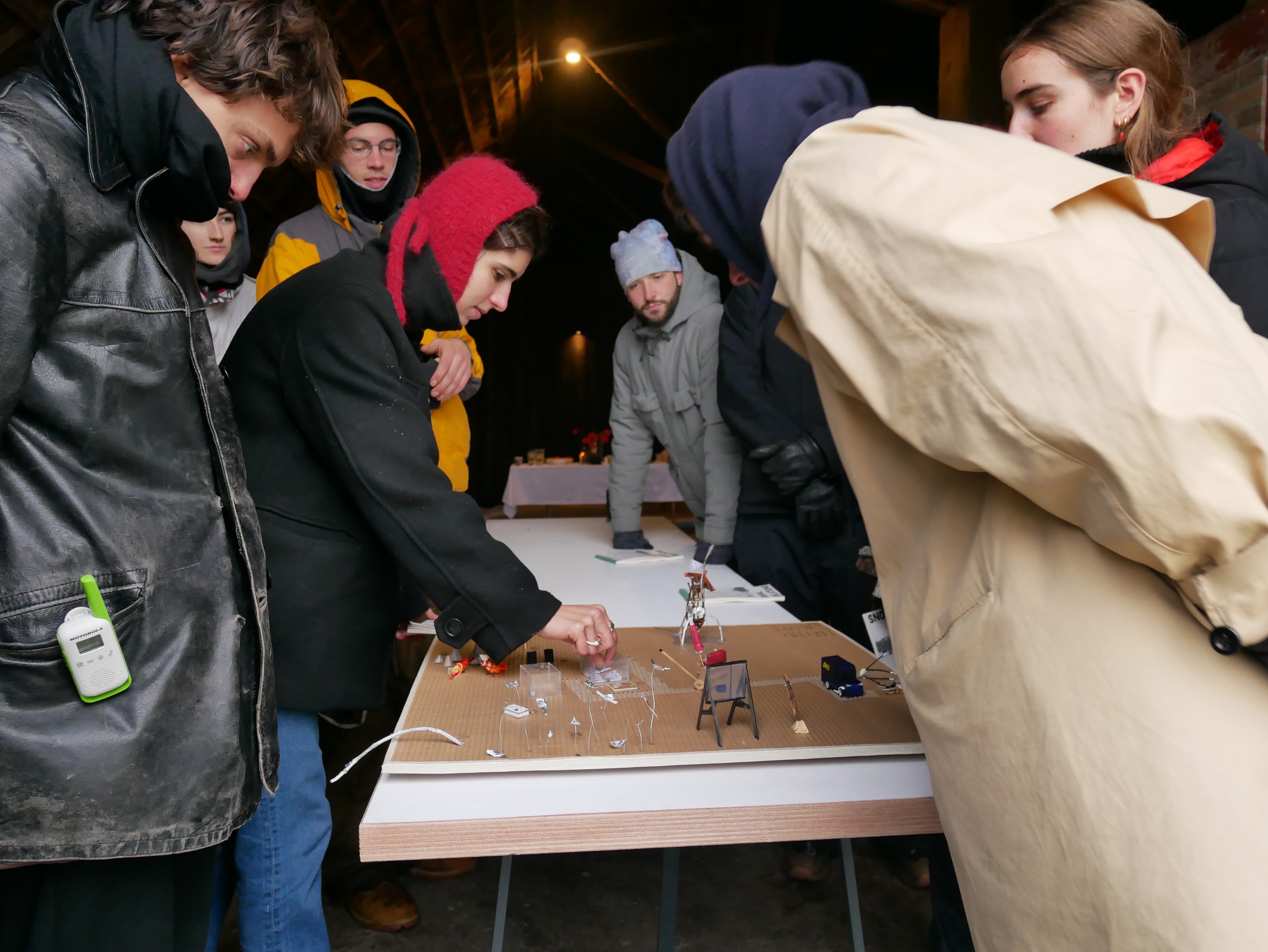
Little rest was a way to escape from intervening in a space that I do not relate to, that doesn’t feel mine, in a nature that didn’t ask me to interact with it. Mapping out the exhibition in the form of a model allowed me to make it my own without disrupting the environment of REST. Although the scales are not accurate, visitors can navigate through the tiny exhibition of my own interpretation of my peers’ works, as well as of the space itself.

One last litter, by Dovydas Karlinskas

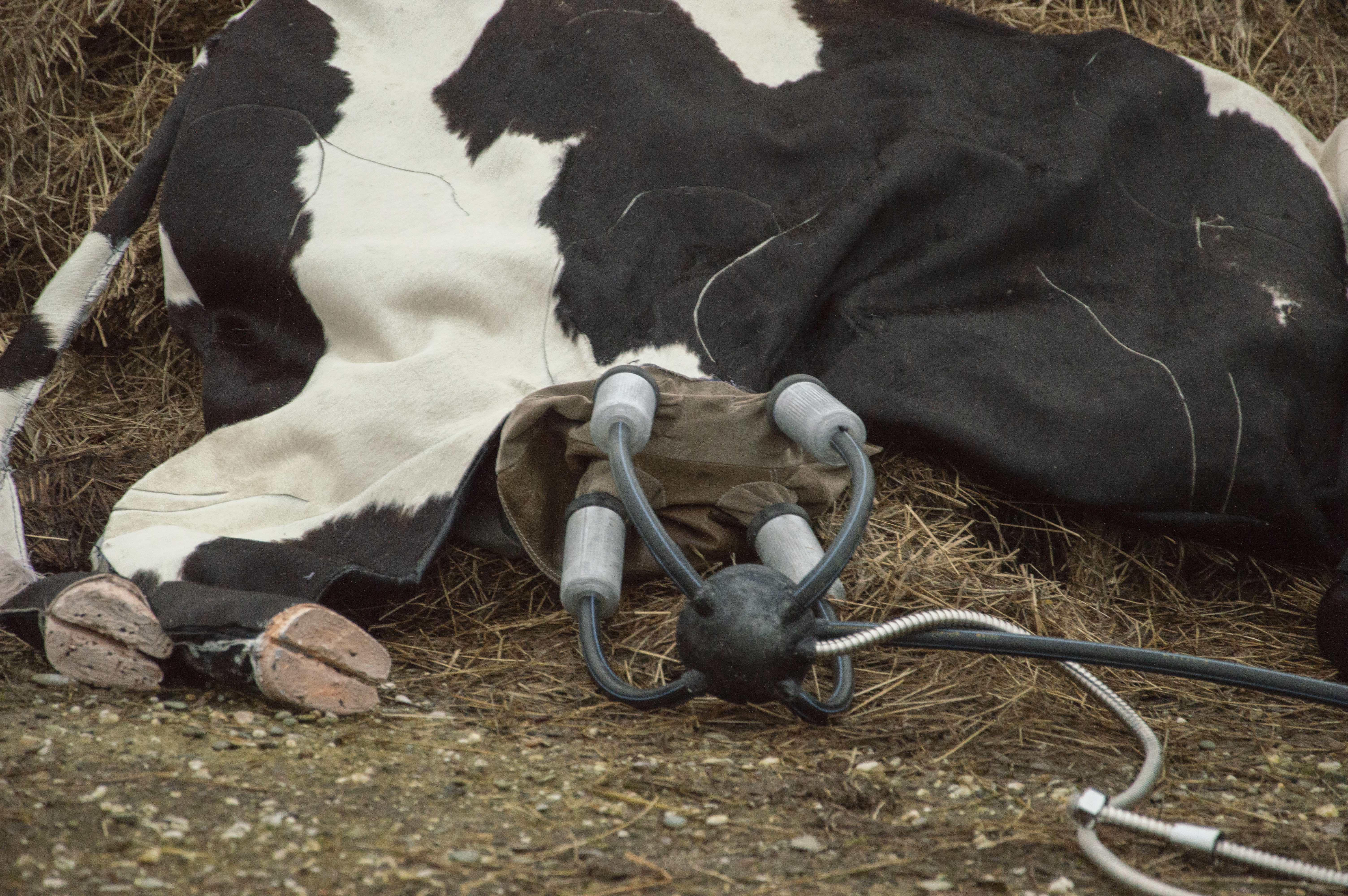
This site specific project began as an exploration of an old dairy farm and its surroundings. It brought back memories of my grandmother’s cows she used to have, which led me to research and reflect on how farm animals are treated in industrial systems today.

In many European farms, cows live indoors with little space or access to pasture, suffer health problems like lameness and mastitis, and are bred for maximum production rather than comfort.

The piece speaks about farm animals being pushed beyond their limits and being treated as products. Set in a rural landscape where small farms are disappearing for larger industrial operations, it raises questions about mass production, overconsumption, and the cost to animal life.

Wind Does Not Recognize Borders, by Matilde Yilmaz

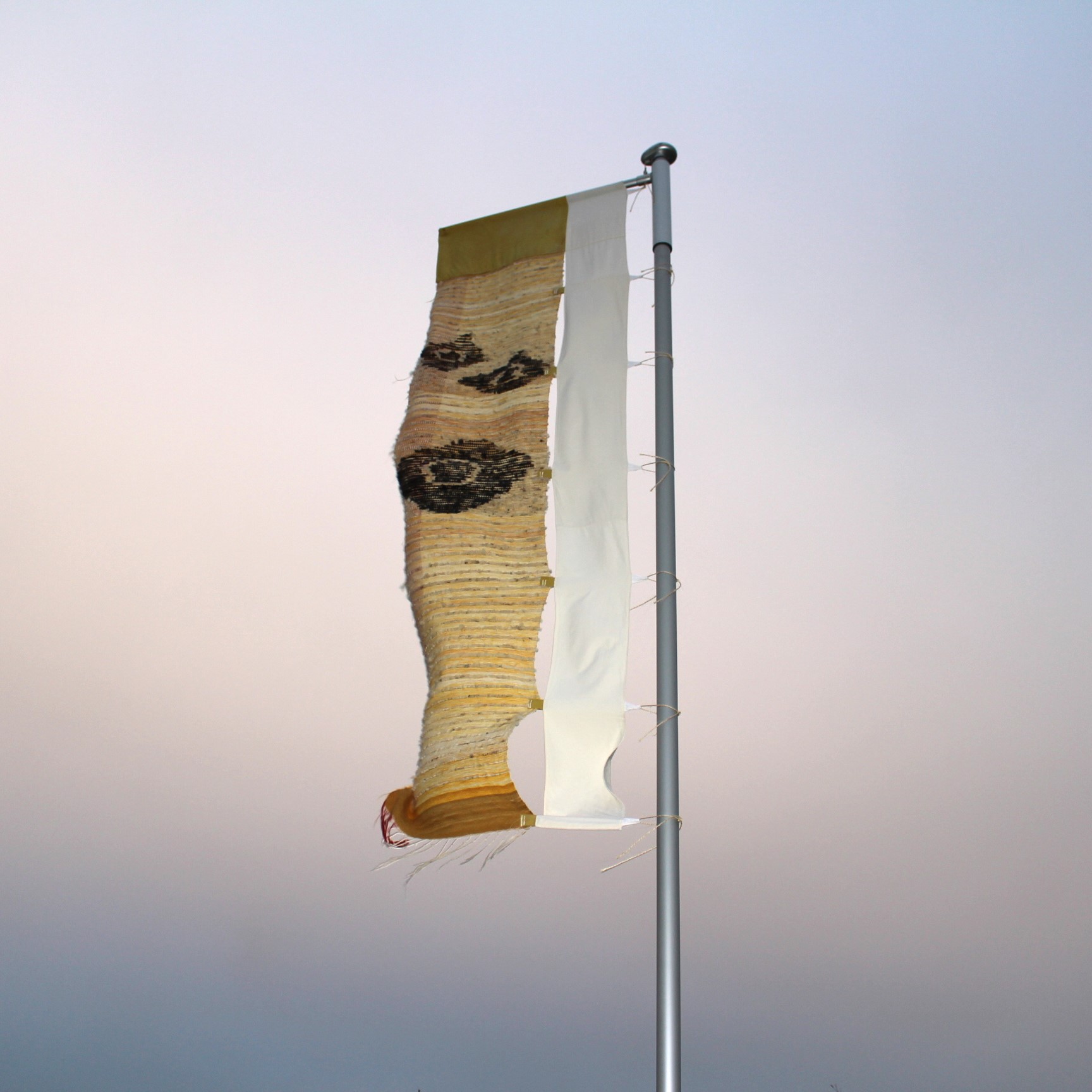
Wind Does Not Recognize Borders’ researches what happens when symbols are designed to undo themselves, when the ritual of marking a border becomes a ritual of release. The flag empties itself in service, becoming less a marker of claimed ground than an agent of life spreading across unmarked earth.

REST is surrounded by what looks like an endless grass desert. Much like the flower seeds embedded within the flag’s fabric, some seeds growing there have the ability to fly, when ready they fly away and find rest elsewhere. They go beyond borders and manage to infiltrate any land that offers them a home. It simply arrives, takes root, and grows.

<em>Little Rest</em>,<br/> Lise Feierabend
<em>Wind Does Not Recognize Borders,</em><br/>Matilde Yilmaz
<em>One last litter, </em><br/>Dovydas Karlinskas

“you can never stand in the same wind twice”, by Stella Vriends

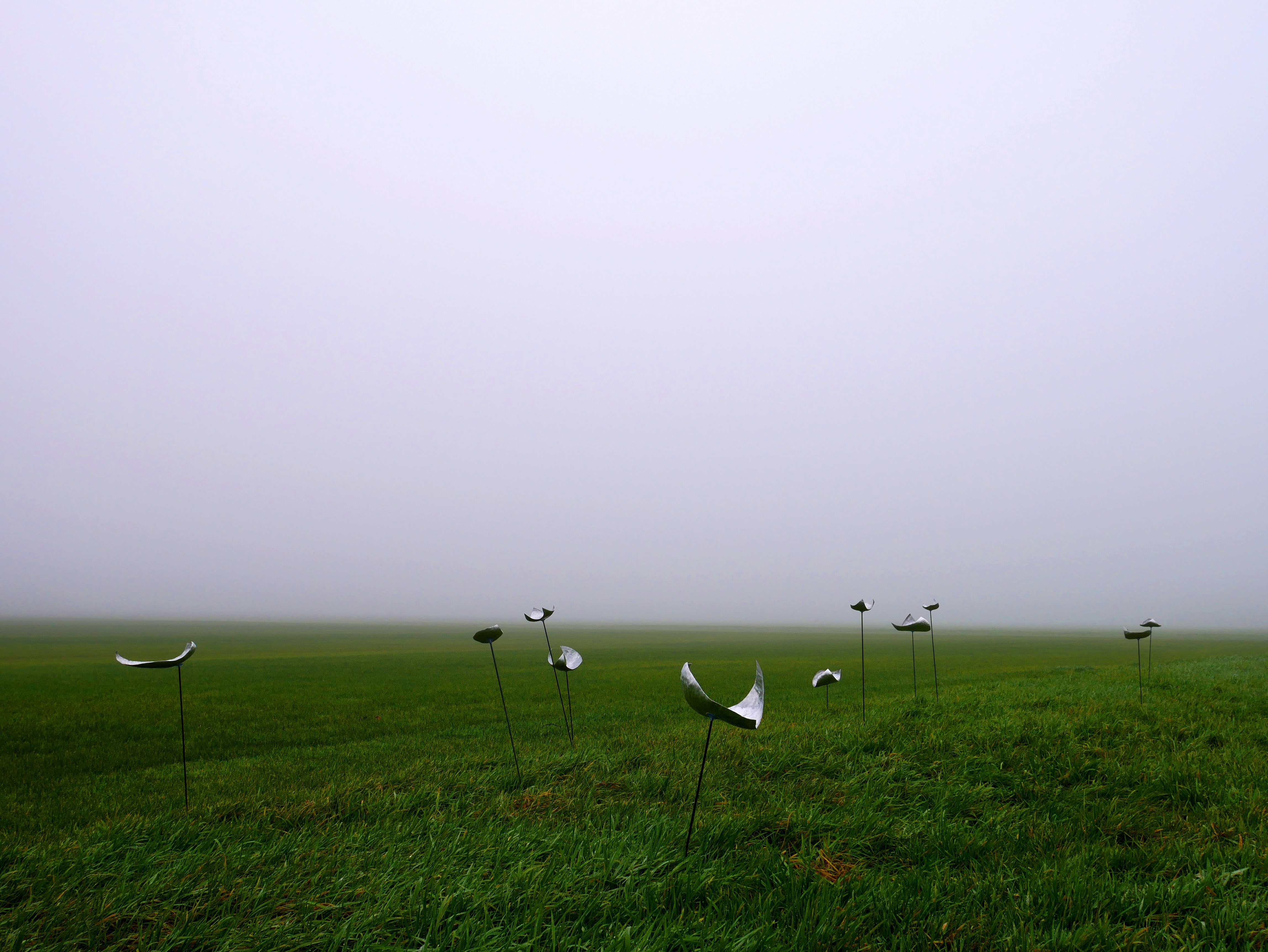
An installation in motion, capturing the kinetic elements of the weather.

From the rained upon soil, hammered-aluminum sails rise like flowers, capturing the invisible author of this landscape. Dancing in the wind and answering to the rain, these sculptures make visual the movement of the weather and its intangible quality becomes tangible.

IKEA for birds, by Thor Farup

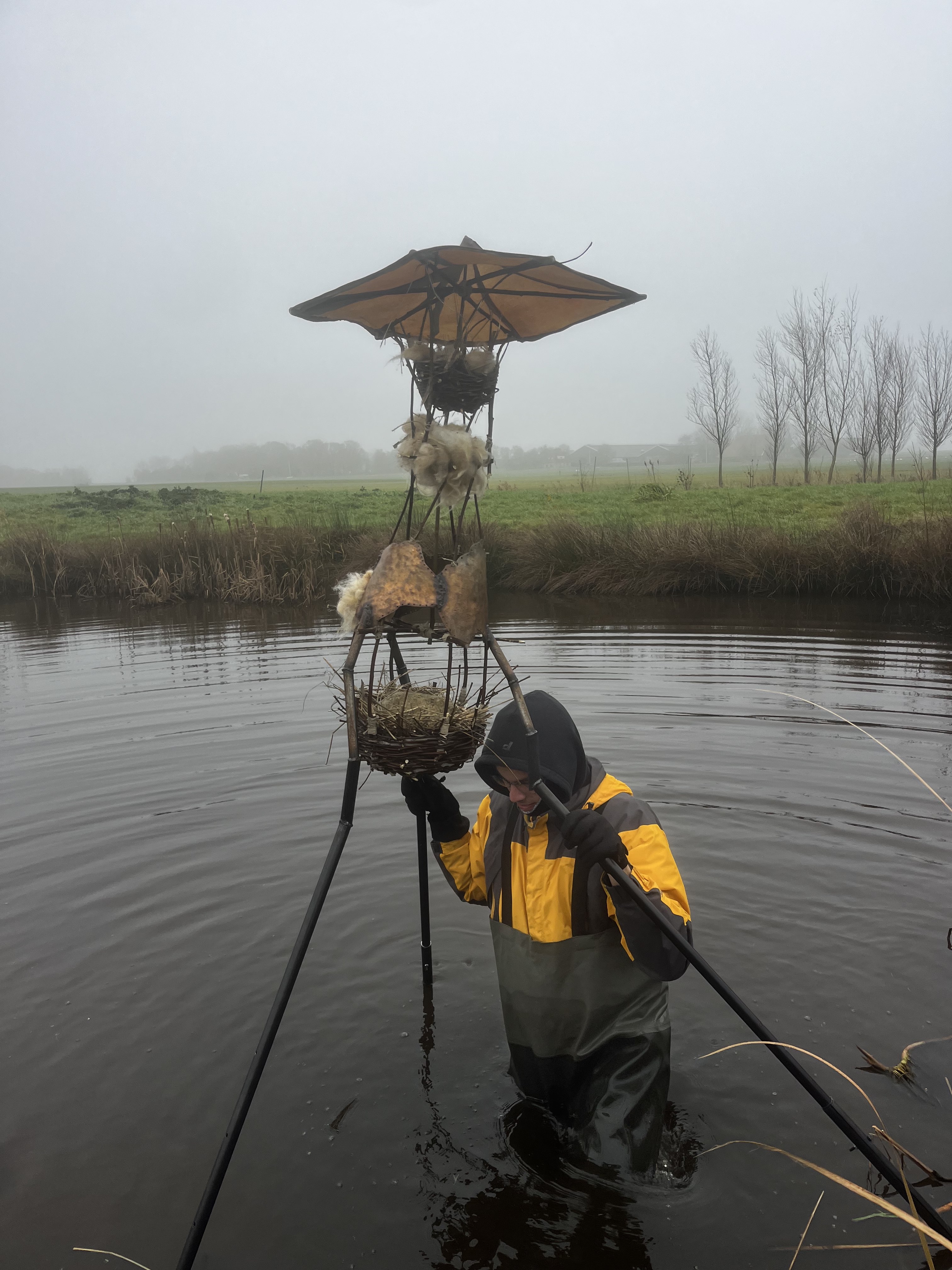
IKEA for birds” is a recipient made of woven willow, linen string, clay, steel, beeswax and a natural dyed upcycled old cotton t-shirt, containing various natural bird nesting materials such as sticks, leaves, wool and reed-leaves. The work explores materialism in the natural world. The very use of materials in the sculpture reflects how birds and other animal species use nothing but the things available on site. Placed in the pond the work is isolated from human interference, available only for the birds, insects, amphibians and other species who might find it worth visiting. “IKEA for birds” seek to encourage all species but humans especially to use what is at hand, and decrease use of unnatural and manufactured materials.

‍<em>“you can never stand in the same wind twice”,</em><br/>Stella Vriends
<em>IKEA for birds, </em><br/>Thor Farup

Environmental amplifiers, by Fritzi Storp

This collection of amplifiers forming a library of analogue listening devices, each designed to tune you in to a specific sound. Every cone has its own acoustic logic, some amplify distant hums or the rush of moving air, while others isolate faint textures.

Some can be worn, turning you into the instrument. When placed against your head, they direct your attention, by bending and amplifying sounds and revealing hidden layers of the environment. Others can be placed or pointed in any direction, tuning the listener toward overlooked frequencies.

Together, these cones function as a way to archive attention. Simple tools for rediscovering the environment through careful, intentional listening. Focus on one sound, or combine them all to listen to the full soundscape.

<em>Environmental amplifiers, </em><br/>Fritzi Storp